


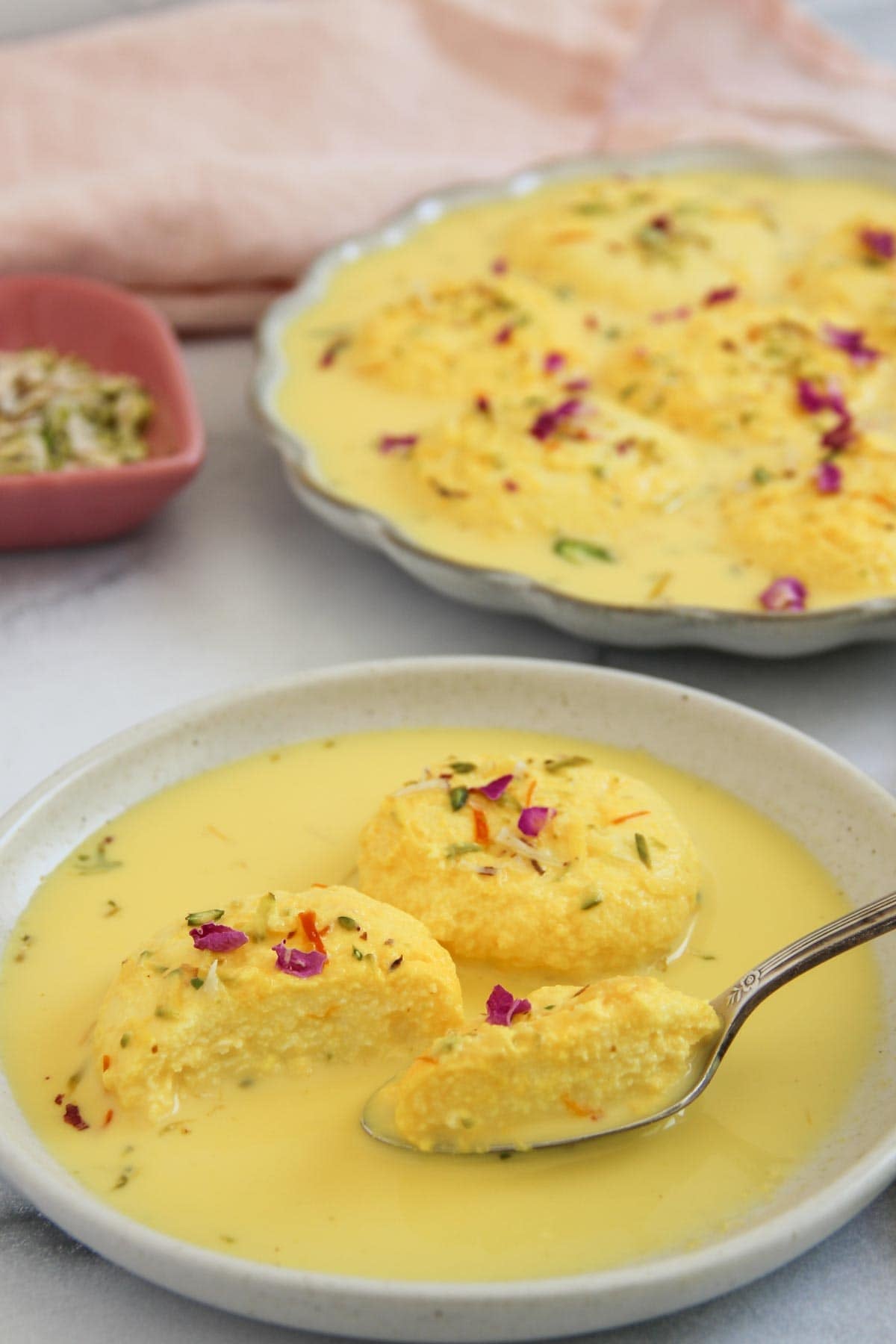
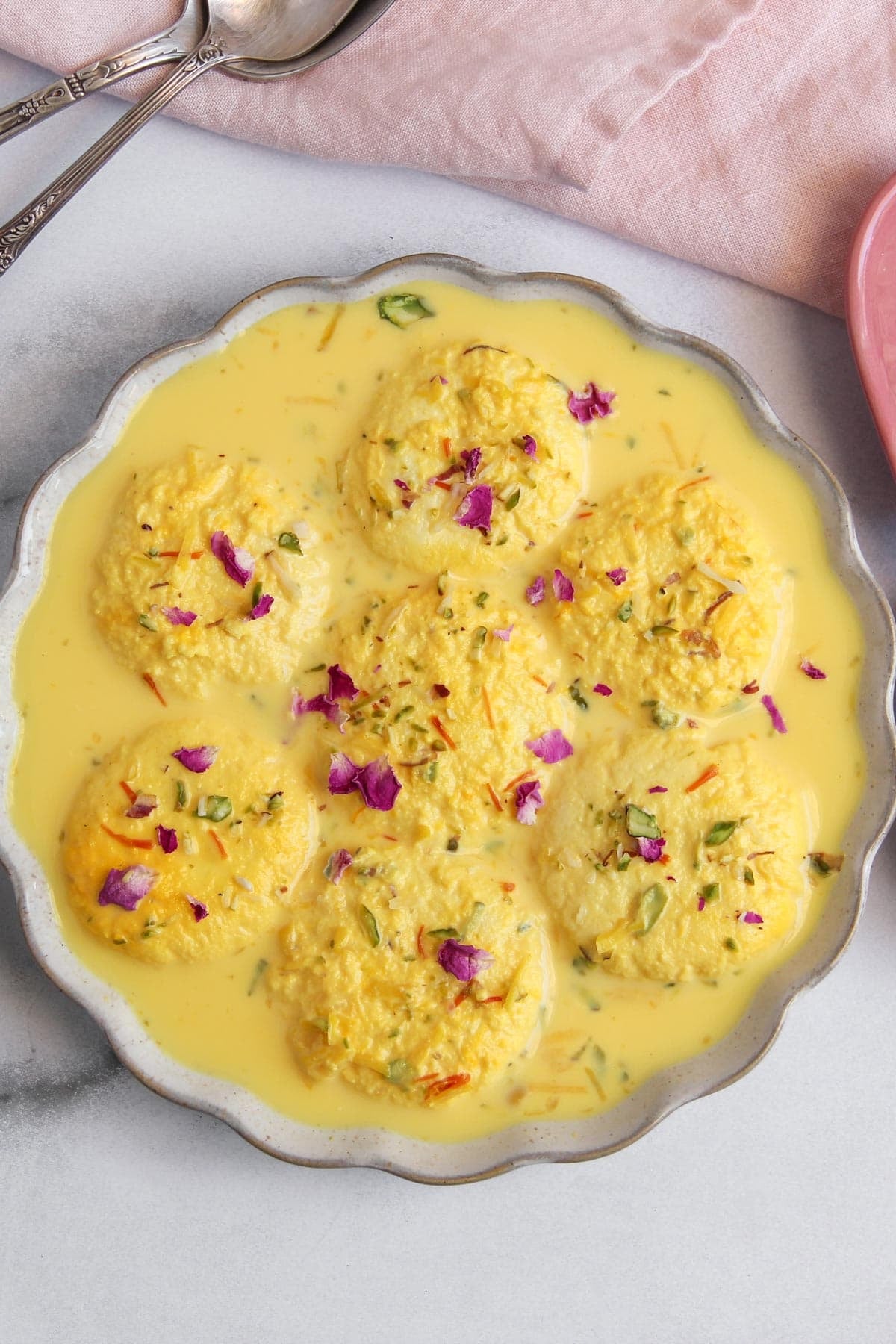
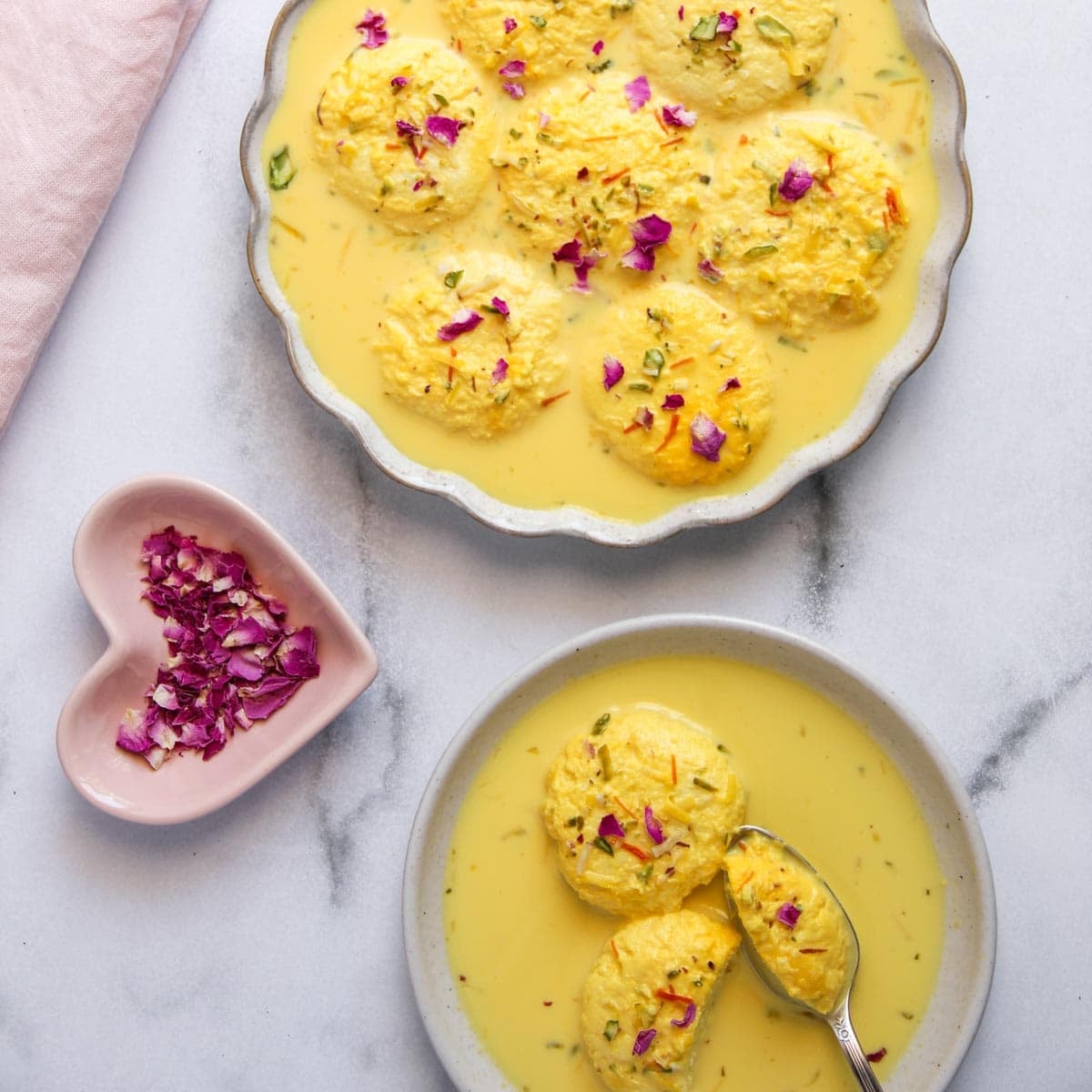
Soft, pillowy chenna discs soaked in fragrant saffron and cardamom milk, rasmalai is one of those desserts that feels like a celebration but comes together with just a handful of everyday ingredients. This authentic homemade recipe comes straight from my family's kitchen, the kind made from scratch in Indian homes for generations. After testing it more times than I can count, I am sharing every tip so yours turns out perfectly. Once you make it at home, you will never go back to store-bought.
Want to Save This Recipe?
Enter your email & I'll send it to your inbox. Plus, get great new recipes from me every week!
By submitting this form, you consent to receive emails from Minstry of Curry
I grew up in a home where fresh milk arrived from our family farm every single day, and my mother never let a single drop go to waste. With quiet confidence and no recipes in sight, she made homemade paneer, ghee, rabdi, shrikhand, rasmalai, and angoori rasmalai, all from scratch, all by andaza. Pure feel, pure instinct, pure love. When I called her from thousands of miles away to learn her rasmalai, she'd say things like "smooth like this" and "thick enough," descriptions that made perfect sense to her hands but sent me back to the kitchen again and again.
So I tested. Batch after batch, I measured everything she described by feel: the exact weight to press the chenna, how long to leave it, which pan sizes give the milk and the rasmalai enough room to do what they need to do. I even tried skipping the ice bath twice, hoping to spare you that step. I couldn't. What you have here is the result of all those calls with my mom, all those test batches, and years of making this recipe my own. I hope it brings the same magic to your kitchen that she always made look so effortless.
What I Learned After Testing This a Dozen Times
- Let the milk cool before you add the vinegar. Always wait 3 to 4 minutes after turning off the heat. I learned the hard way that adding vinegar to still-boiling milk makes the chenna tough and rubbery.
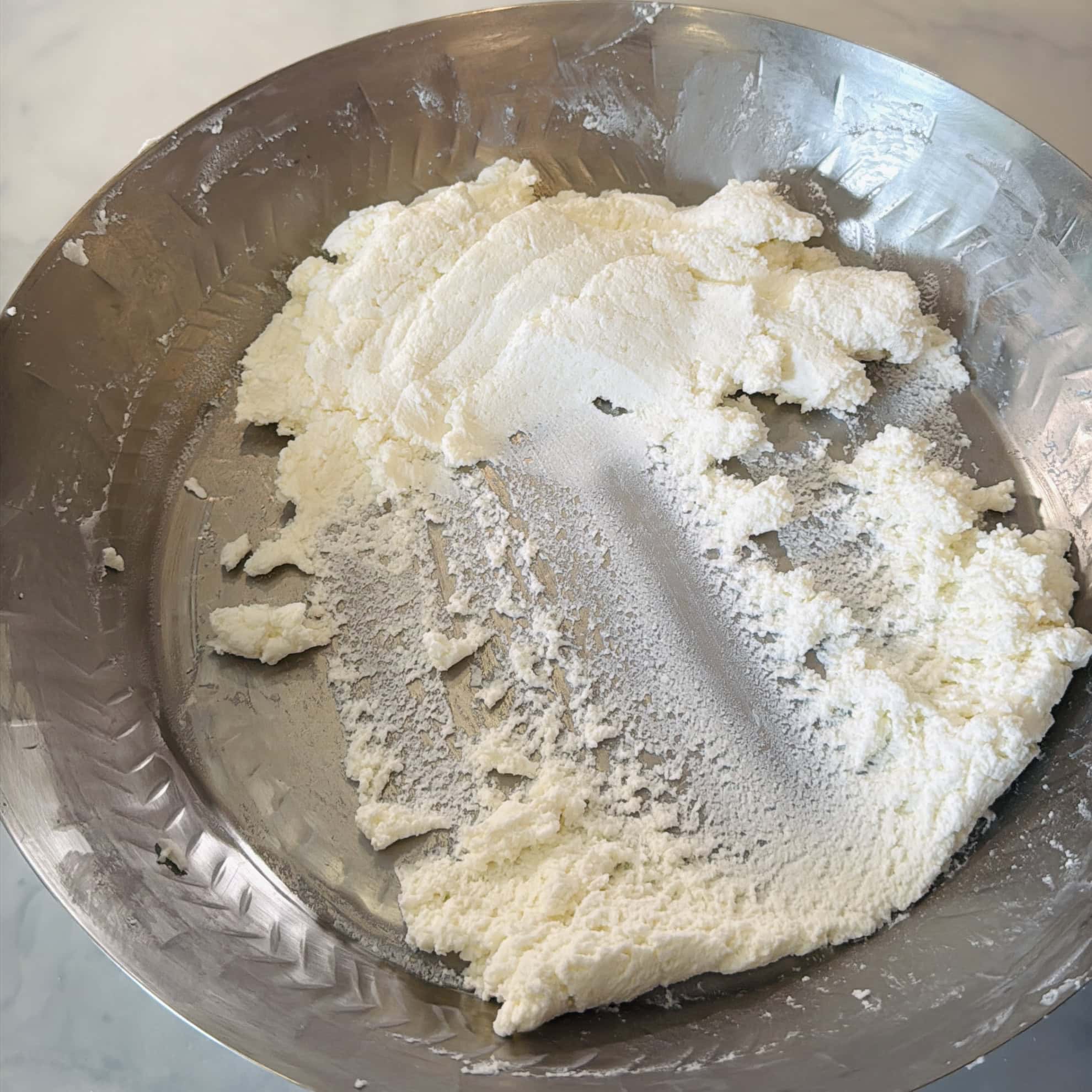
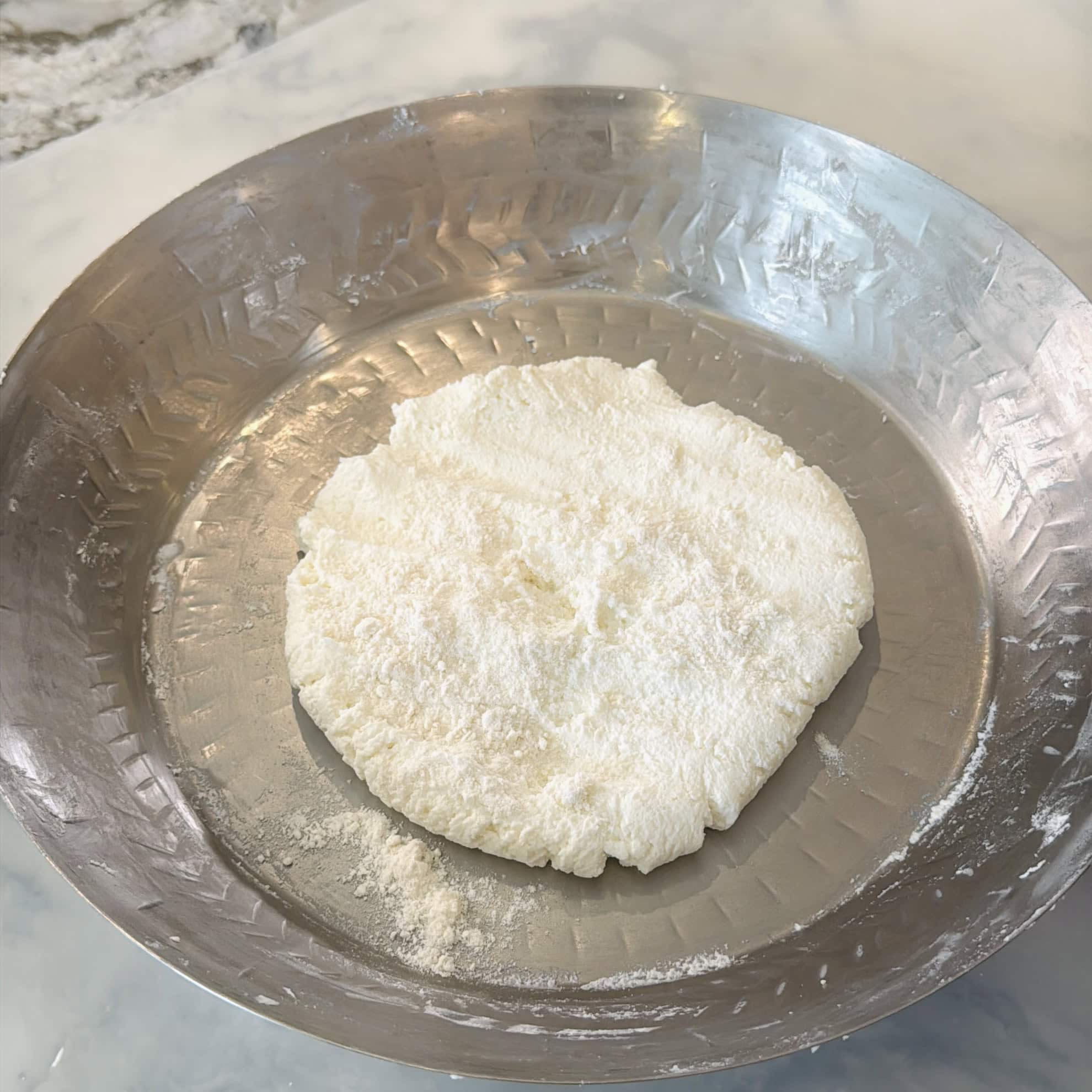
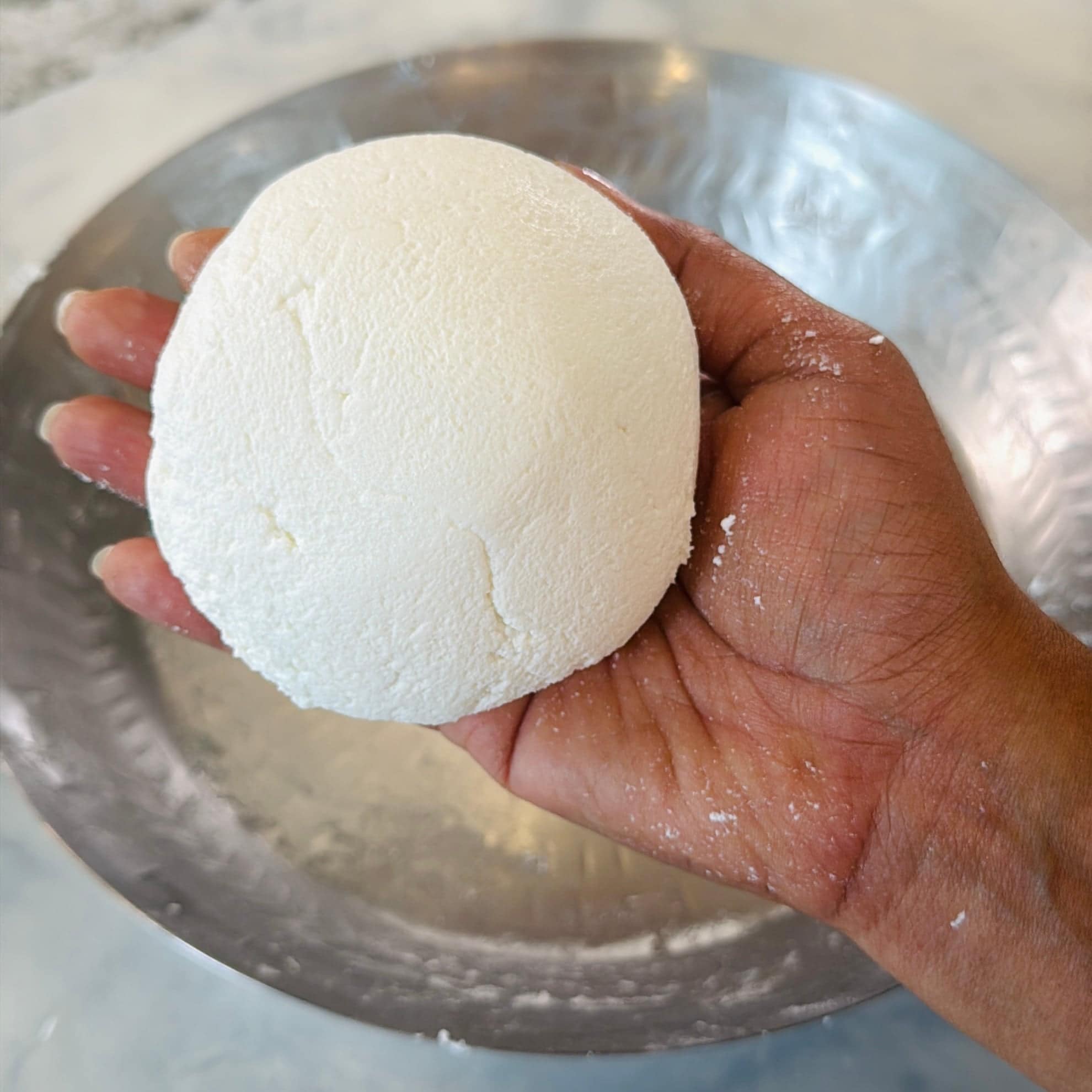
- The chenna is everything. Underworked chenna leads to grainy, crumbly rasmalai. Overworked chenna turns greasy and falls apart in the syrup. The sweet spot is 8 to 10 minutes of massaging with the heel of your palm. You're looking for smooth, slightly tacky dough that holds its shape without cracking. The moment it feels like smooth clay, stop.
- The ice water bath is not a shortcut you can skip. I tried twice. Transferring the rasmalai straight from the hot syrup to an ice bath stops the cooking at exactly the right moment and helps them hold their shape. They should sink when you add them, not float. Floating means they need another minute in the syrup.
- Add the rasmalai to warm milk, not cold. This was one of my mom's most insistent tips, and she was right. Warm milk gets absorbed immediately and the rasmalai plump back up the way they should. Cold milk slows everything down.
How to make the best Rasmalai
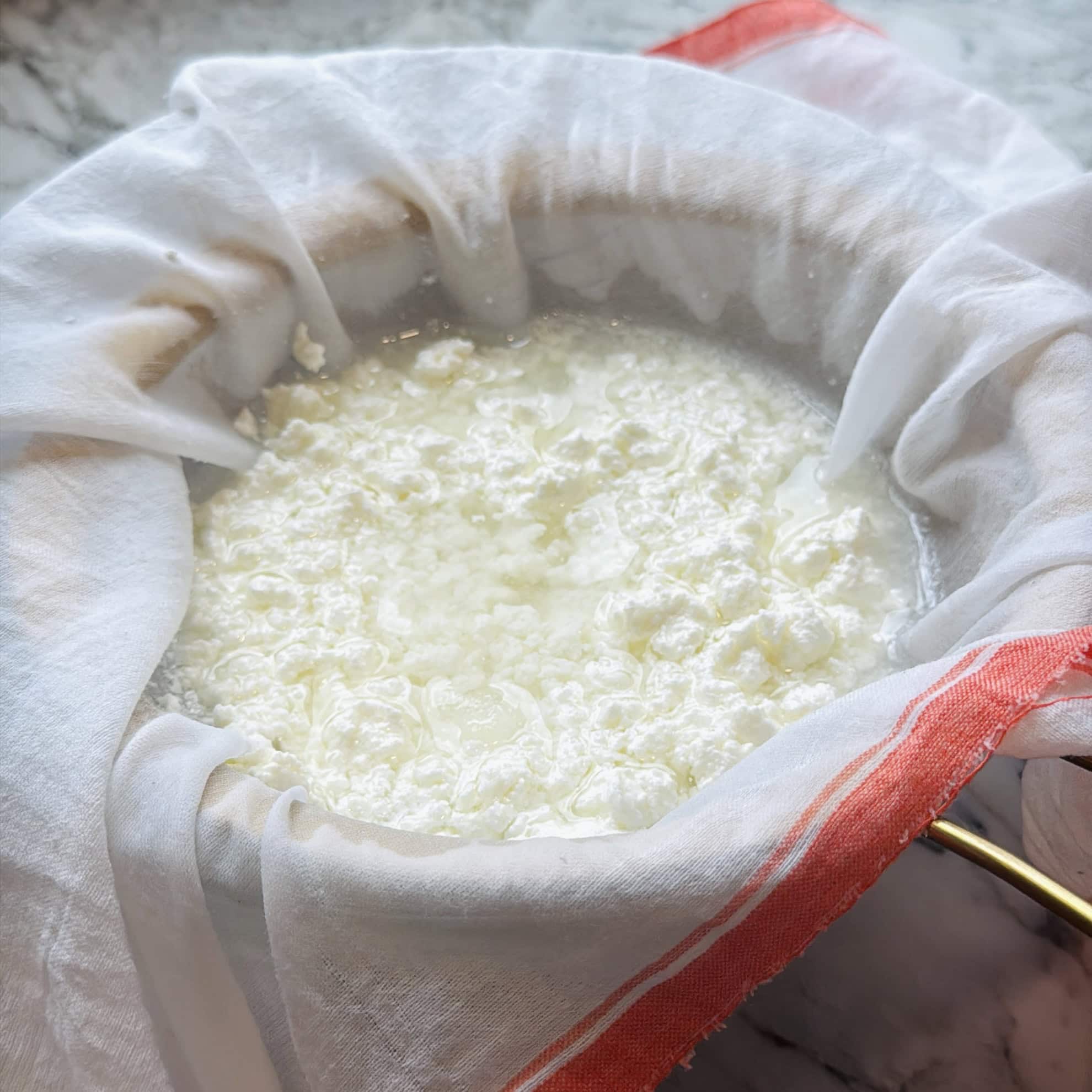
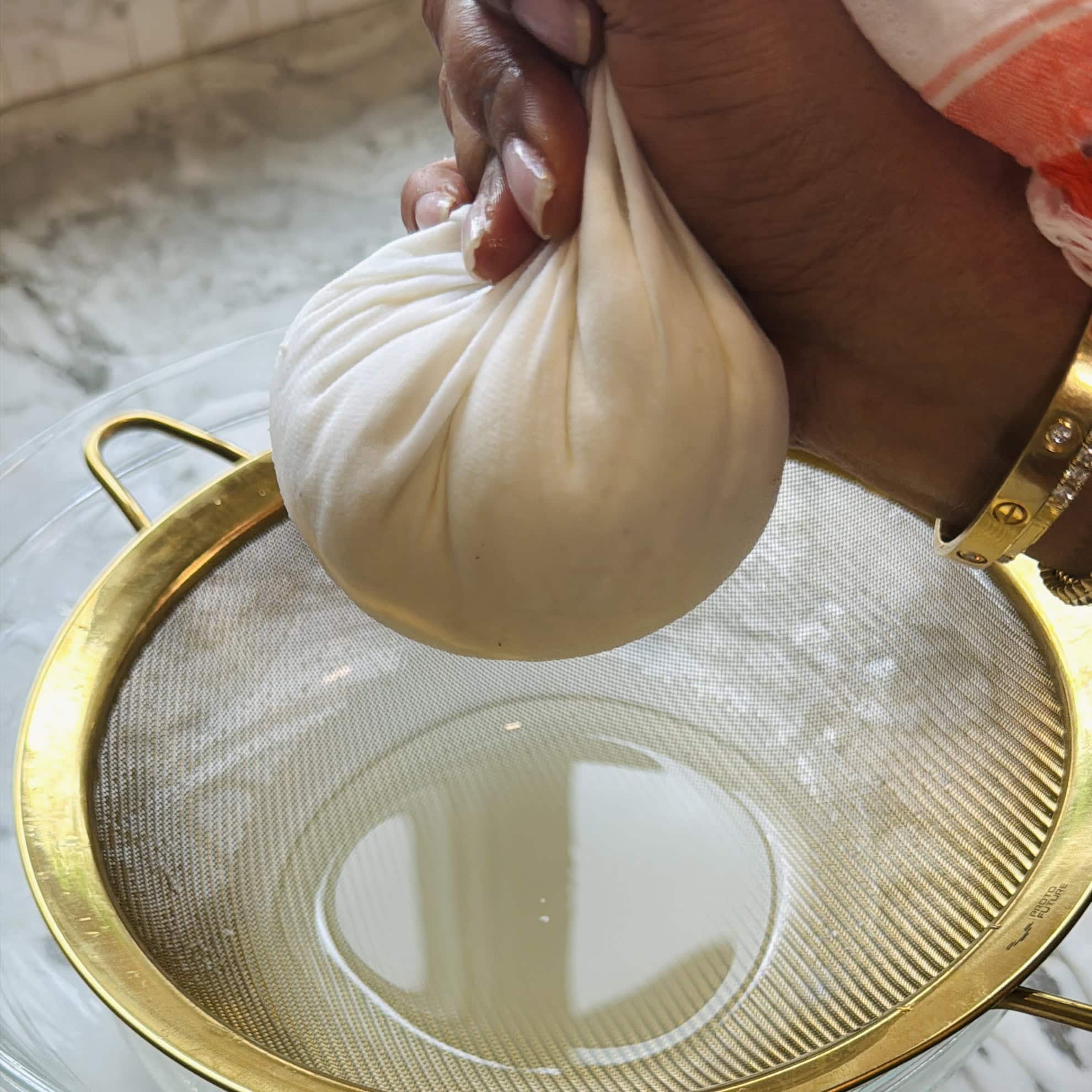
Gently squeeze the cloth just until the water stops dripping.
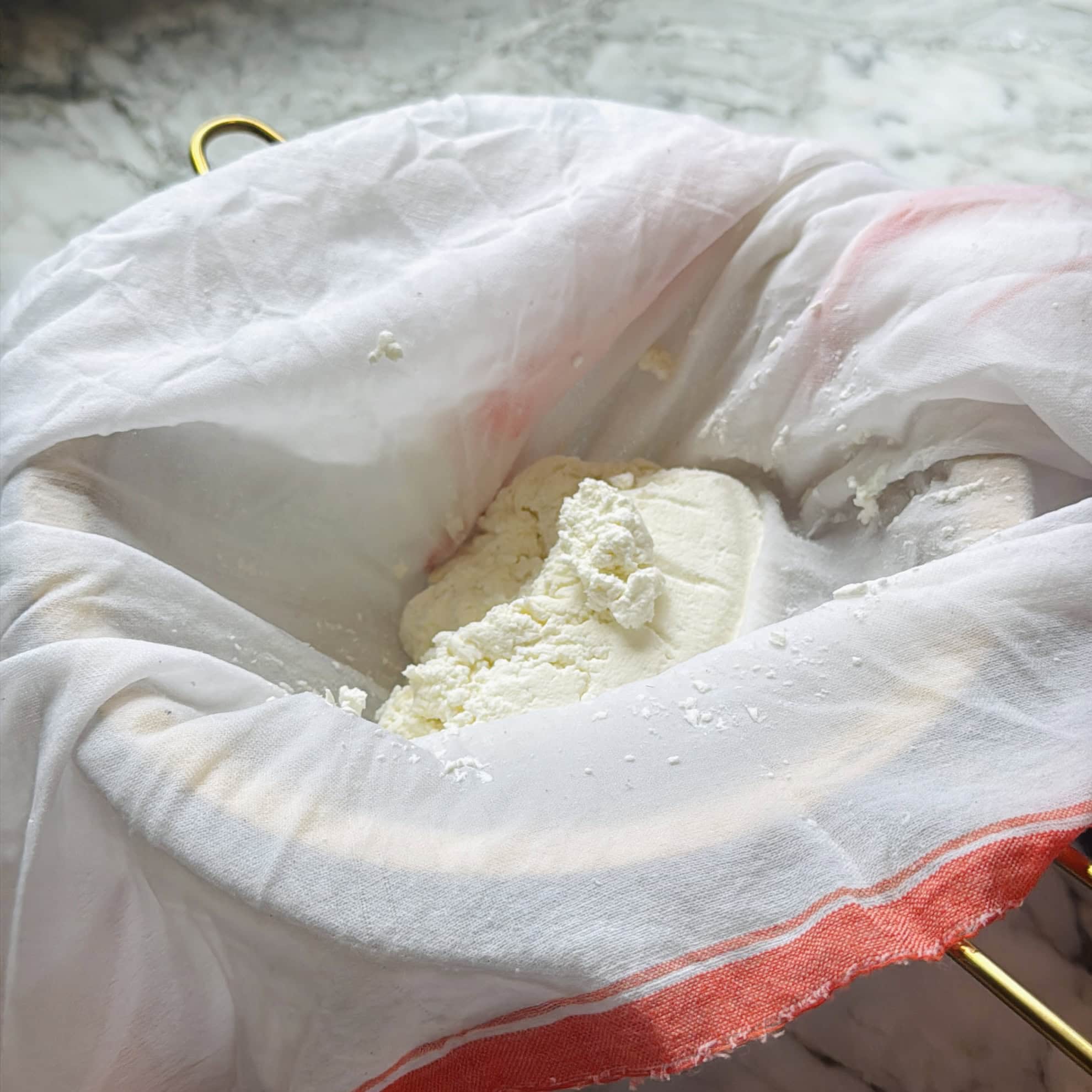
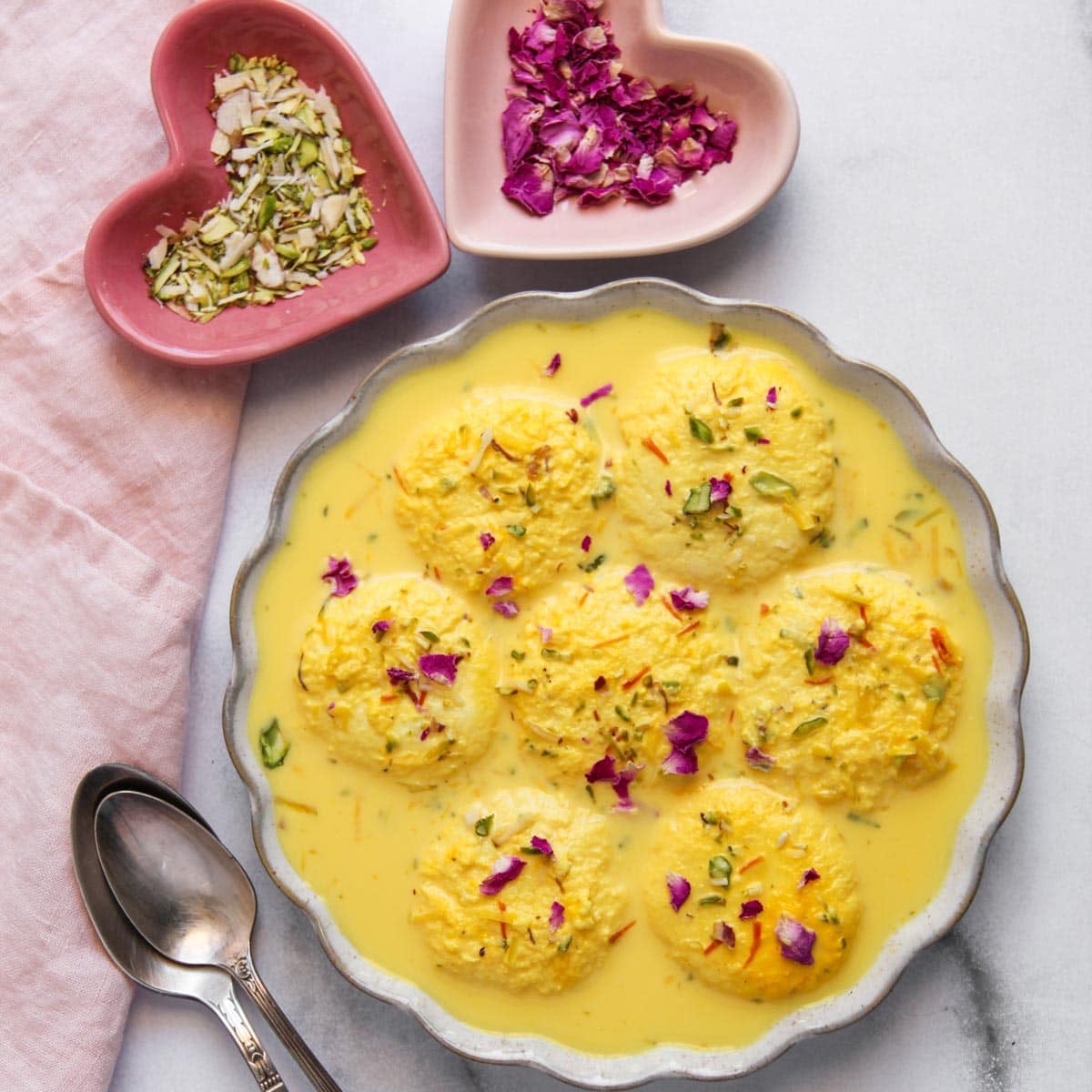
Serve rasmalai chilled, spooned into small bowls with extra saffron milk. Garnish with a few extra slivered pistachios and almonds. For a special occasion, add a light additional pinch of saffron and a small edible silver leaf (varak) on top.
Rasmalai keeps well in the refrigerator for up to 3 days in an airtight container, fully submerged in the flavored milk. The flavor actually deepens overnight as the chenna absorbs more of the saffron and cardamom milk. It's genuinely better on day two.
Tips and Troubleshooting
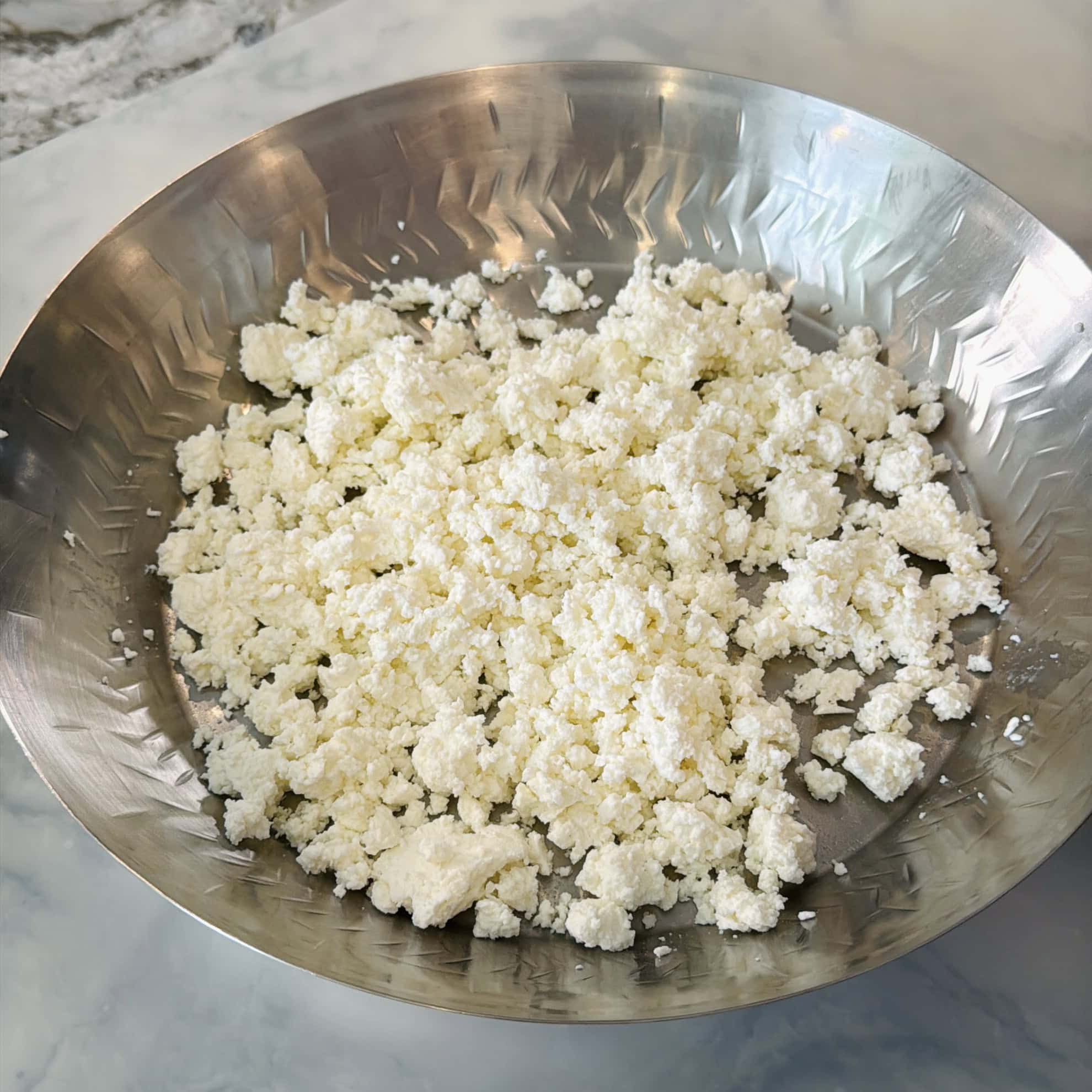
What should the chenna look like before kneading? When you remove it from under the weight, it should look slightly crumbly and feel a little dry, not pasty or sticky. Pasty chenna means there's still too much water in it, which will make the rasmalai dense. Return it to the strainer under the weight for a few more minutes.
Chenna not coming together or still crumbly after kneading: It may be slightly too dry. Wet your palms very lightly with water and continue kneading.
Rasmalai broke apart in the syrup: Most likely the chenna wasn't kneaded long enough or evenly enough. Make sure there are no dry pockets when you knead.
Rasmalai turned hard or rubbery: The syrup may not have been boiling hard enough, or the milk was too hot when you added the vinegar.
Flavored milk too thick: You cooked it down too much. Stir in a small splash of warm milk to loosen it to the right consistency.
★ Tried this recipe? I'd love to hear how it turned out! Leave a comment and let me know, or snap a quick pic and upload it-I love seeing your creations. If you're on Instagram, tag @ministry_of_curry so I can check it out. Your feedback means so much to me and makes all the time I spend perfecting each recipe totally worth it. Thank you!
Recipe

Rasmalai Recipe: Soft, Spongy, and Melt-in-Your-Mouth
Equipment
- cheesecloth
Recipe Video
Ingredients
Flavored Milk (Ras)
- 3 cups full-fat milk
- ⅓ cup sugar
- 8 almonds thinly sliced
- 10 pistachios thinly sliced
- ½ teaspoon cardamom powder
- 1 pinch saffron
Chenna
- 1 liter 4¼ cups full-fat milk
- 2 tablespoons white vinegar
- 2 tablespoons water
- 1 teaspoon all-purpose flour
- 4 cups ice-cold water for washing
Sugar Syrup
- 1 cup sugar
- 4 cups water
- 4 green cardamom pods lightly smashed
Instructions
Make the Flavored Milk
- Rinse the inside of a heavy-bottomed 3-quart saucepan with water and leave a small splash in the pan. This helps prevent the milk from scorching. Add the milk and bring it to a full boil over medium heat, takes about 10 to 12 minutes.
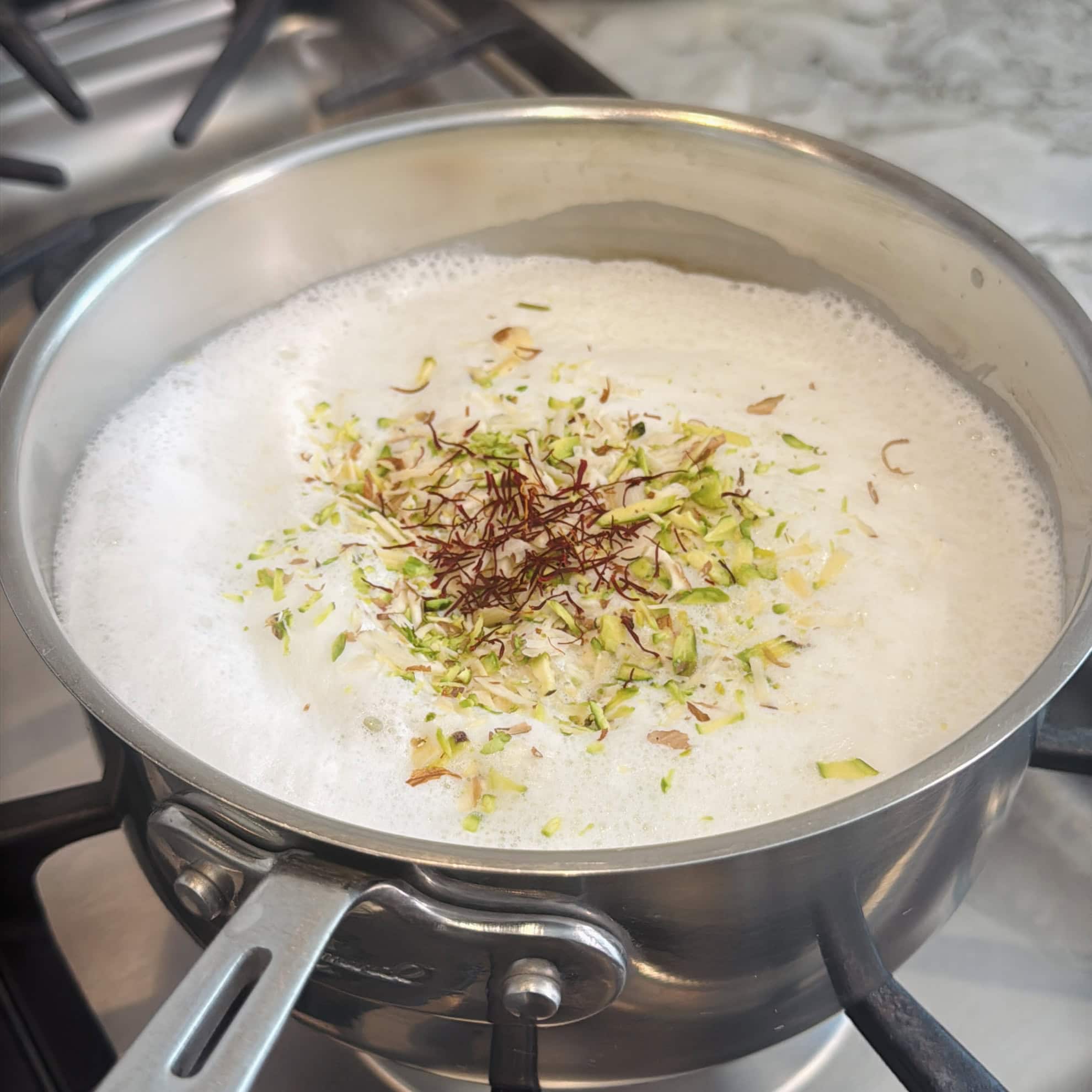
- Add the sliced almonds, pistachios, cardamom powder, and saffron. Simmer on medium heat for 5 minutes, stirring occasionally.
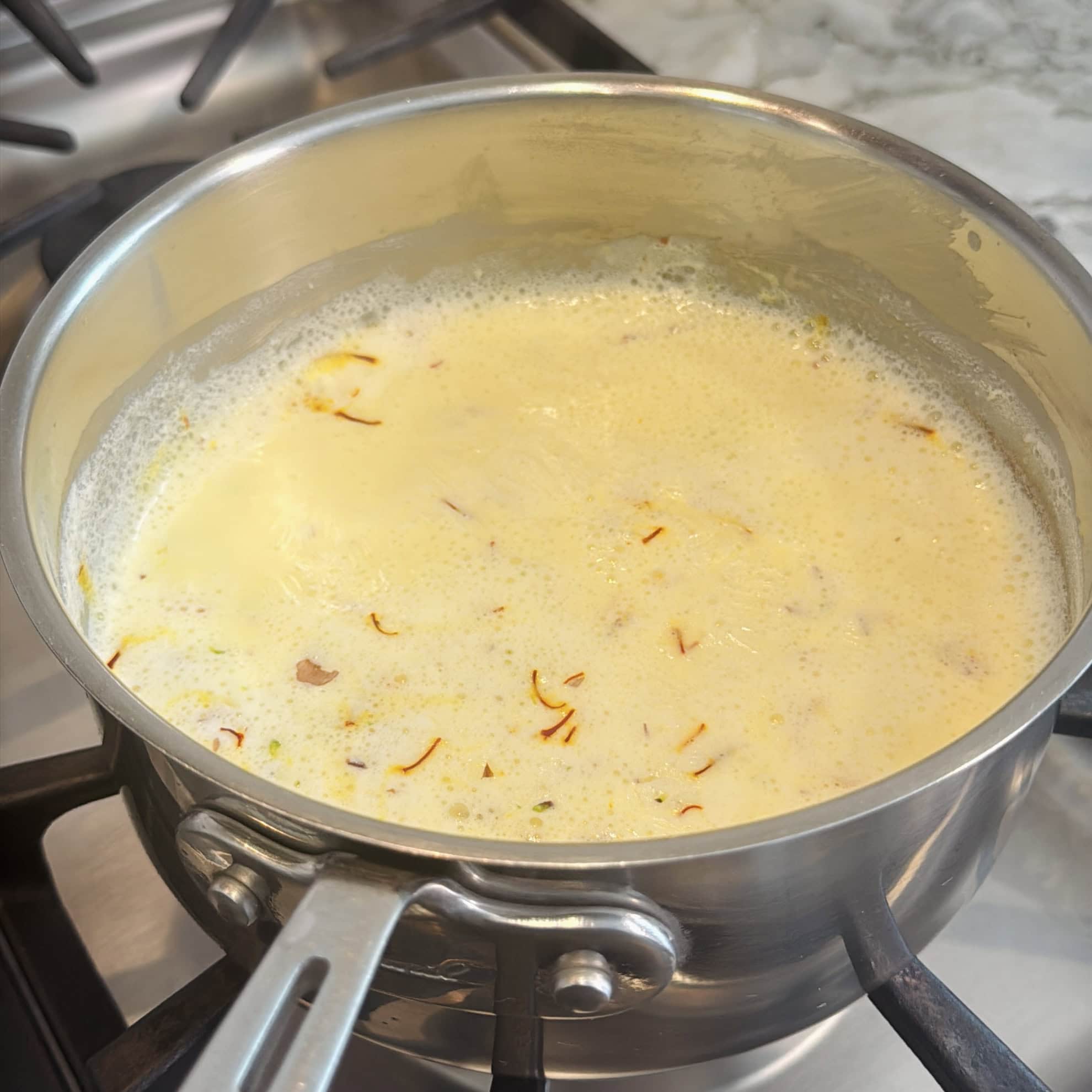
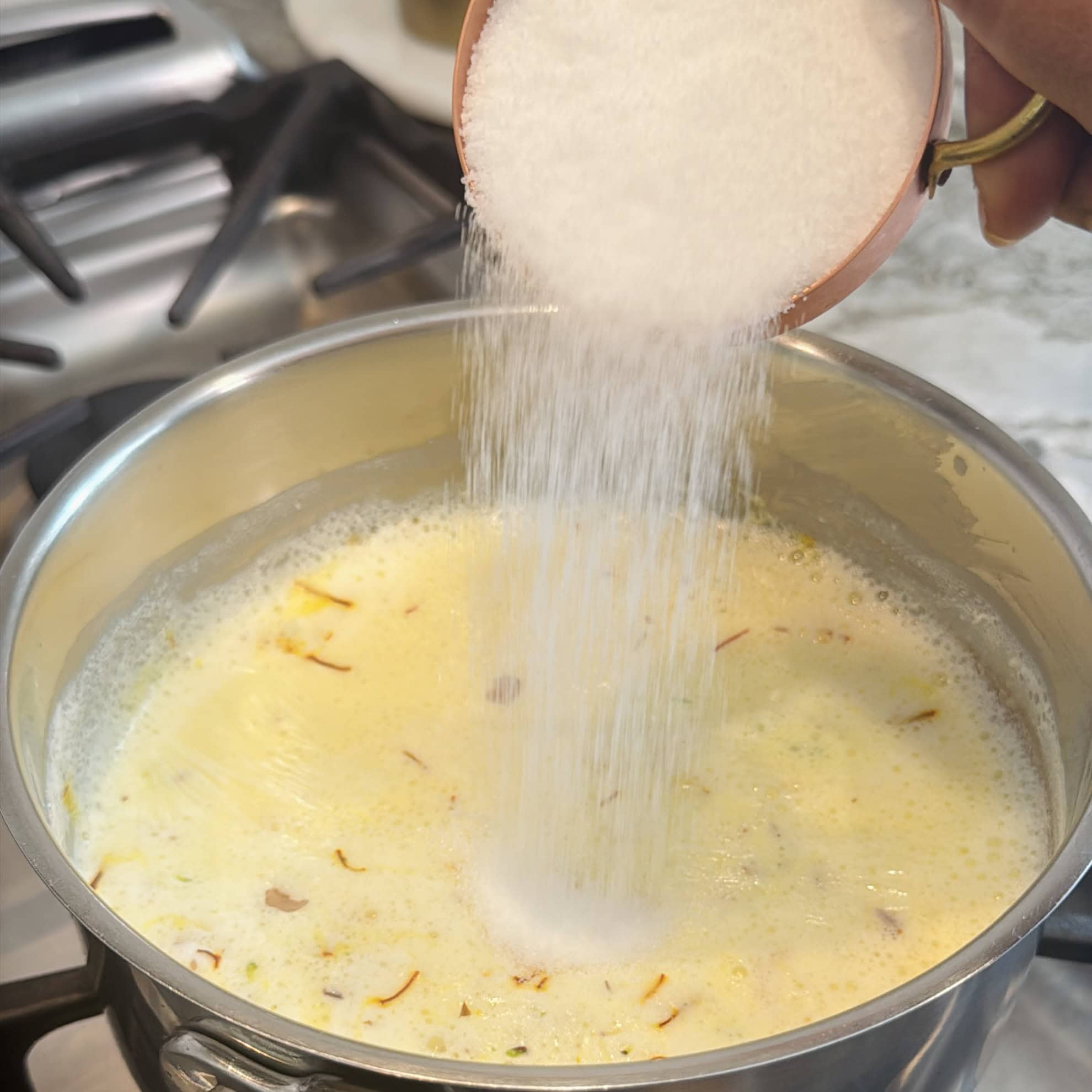
- Add the sugar and continue cooking for another 10 to 12 minutes on medium heat, stirring regularly. You want it slightly thickened but not too thick. You're reducing from 3 cups down to about 2½ cups.
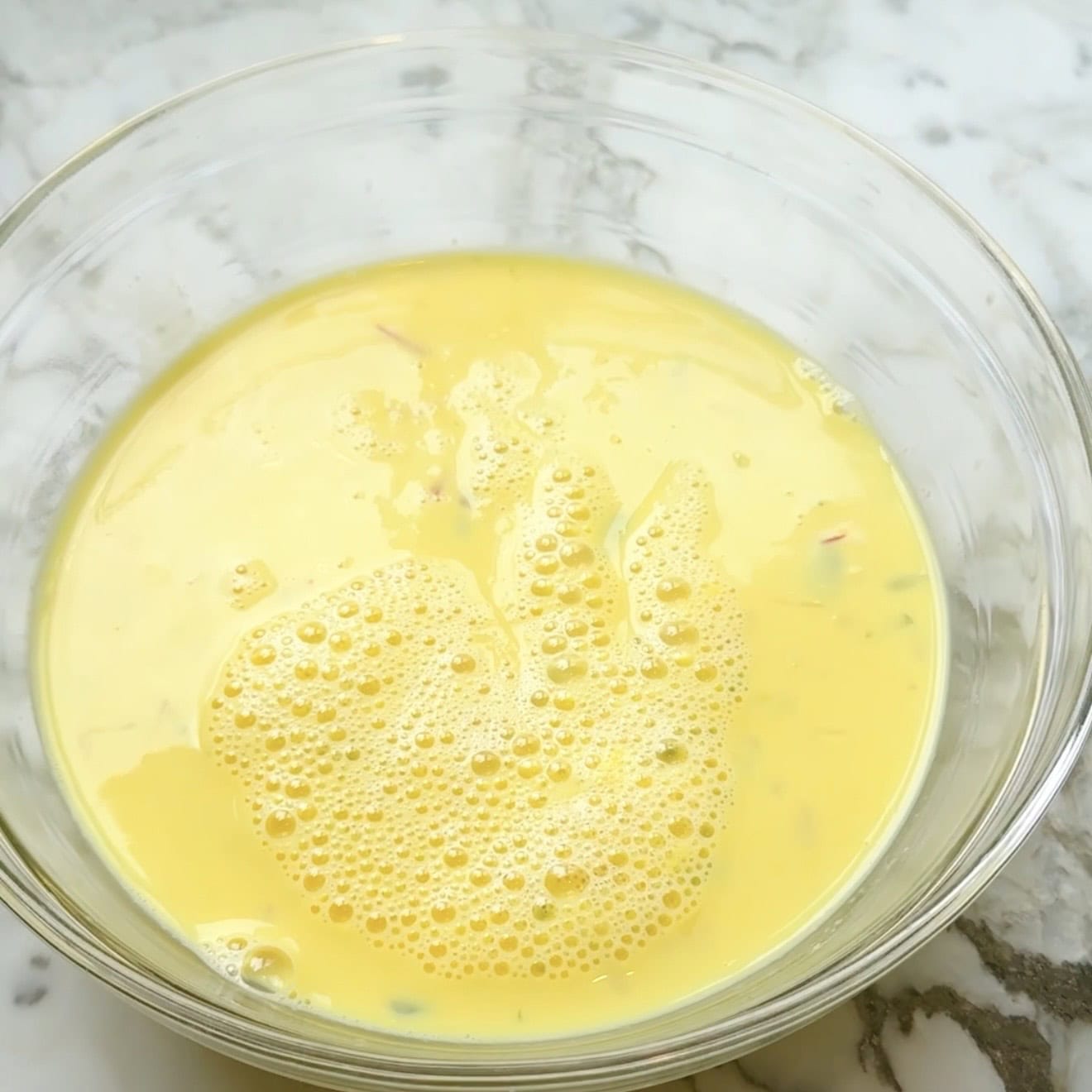
- Pour the flavored milk into a bowl and set aside to cool slightly. You'll warm it back up before adding the rasmalai at the end.
Make the Chenna
- Place a strainer over a large bowl and line it with a muslin cloth (cheesecloth).
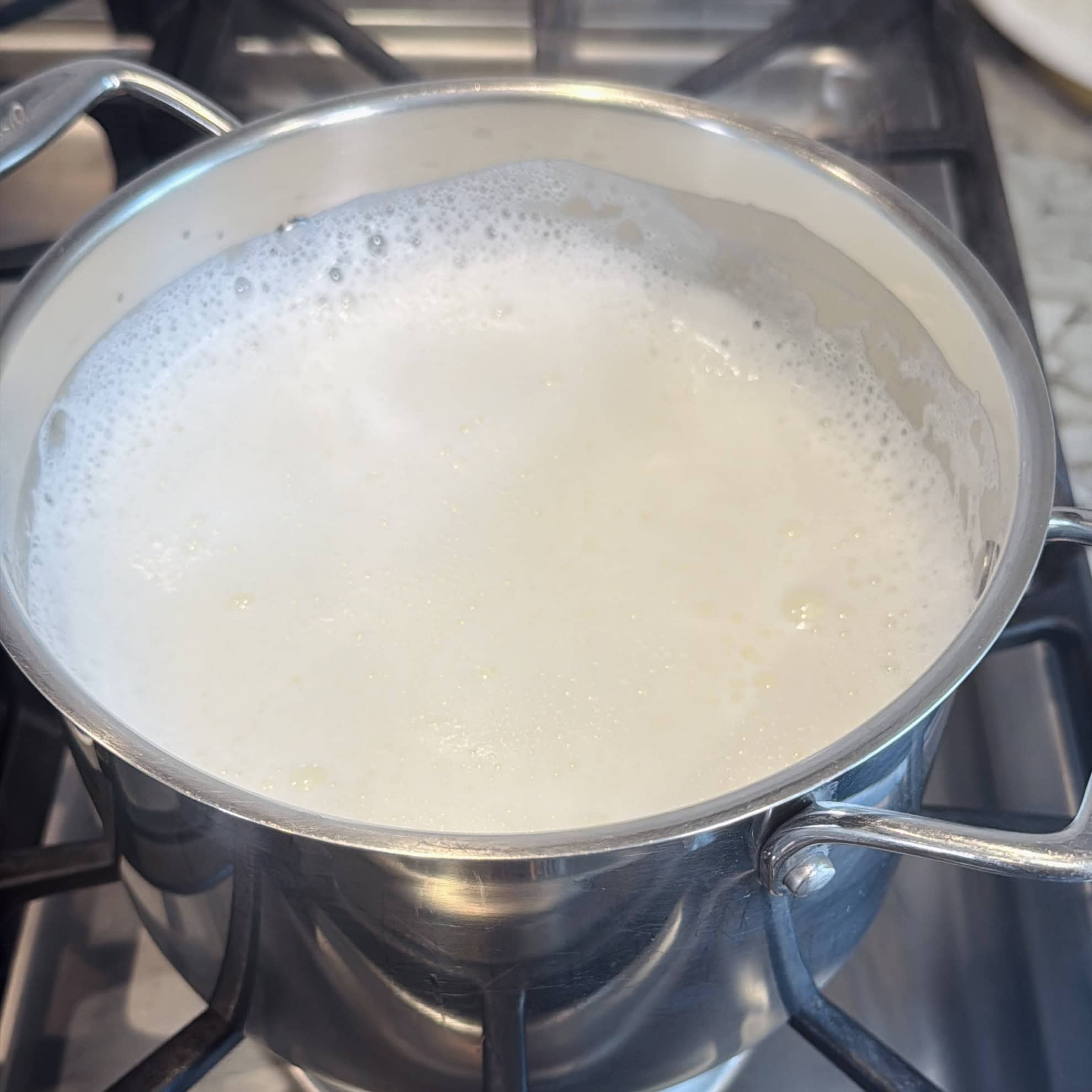
- Add milk to a heavy-bottomed 3-quart saucepan and bring to a full boil over medium heat, it will take about 10 to 12 minutes.
- Turn off the heat and let the milk cool for 3 to 4 minutes. This step is important. If the milk is too hot, the chenna will turn rubbery.
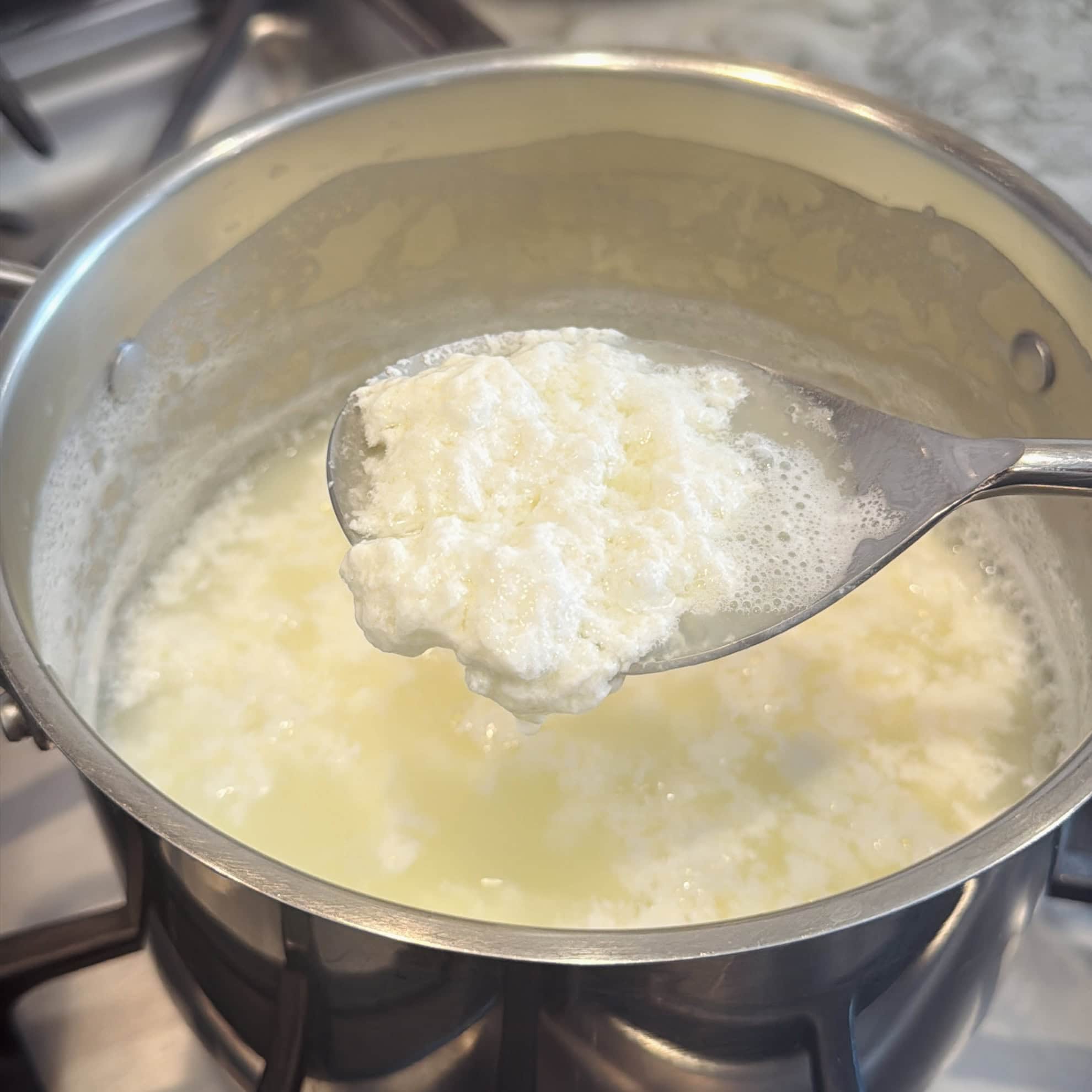
- Mix the vinegar and water together in a small bowl. Add it to the milk one tablespoon at a time, stirring gently between each addition. Do not stir vigorously. Gentle, slow stirring is key.
- After the 3rd or 4th tablespoon, you'll see the milk separate into white curds and a pale greenish-yellow liquid (whey). Once this happens, stop adding vinegar. You don't need more.
- Pour the contents of the pan over the muslin cloth in your strainer. The whey will drain through. Save the whey if you like, it's great added to dough or soups.
- Pour the ice-cold water over the chenna to rinse away the vinegar and remove any sourness.
- Gently squeeze the cloth just until the water stops dripping. You're removing excess water, not drying out the chenna completely.
- Place the cloth back on the strainer. Set something heavy on top (about 3 pounds) and leave it for 8 to 10 minutes. You're not trying to dry it out, just removing some of the excess moisture. When you unwrap it, the chenna should look slightly crumbly and feel a little dry to the touch. If it looks pasty or feels sticky, it still has too much water. Give it a few more minutes under the weight.
Knead the Chenna
- Place a large plate or parat on a silicone mat or damp kitchen towel so it doesn't slide while you work.
- Add the chenna onto the plate. It should feel moist but not so wet that it sticks to your fingers when pressed. If it's sticky, give it another minute of draining time.
- Crumble the chenna and then knead it with the heel of your palm for 8 to 10 minutes, working it into a smooth dough. You'll feel it transform from grainy to silky as you go.
- Add 1 teaspoon of all-purpose flour and knead lightly for about a minute to incorporate.
- Let the dough rest for 5 minutes while you start the sugar syrup.
Make the Sugar Syrup
- Add the sugar, water, and smashed cardamom pods to a wide 4-quart pan. Bring to a full boil over high heat, about 10 minutes.
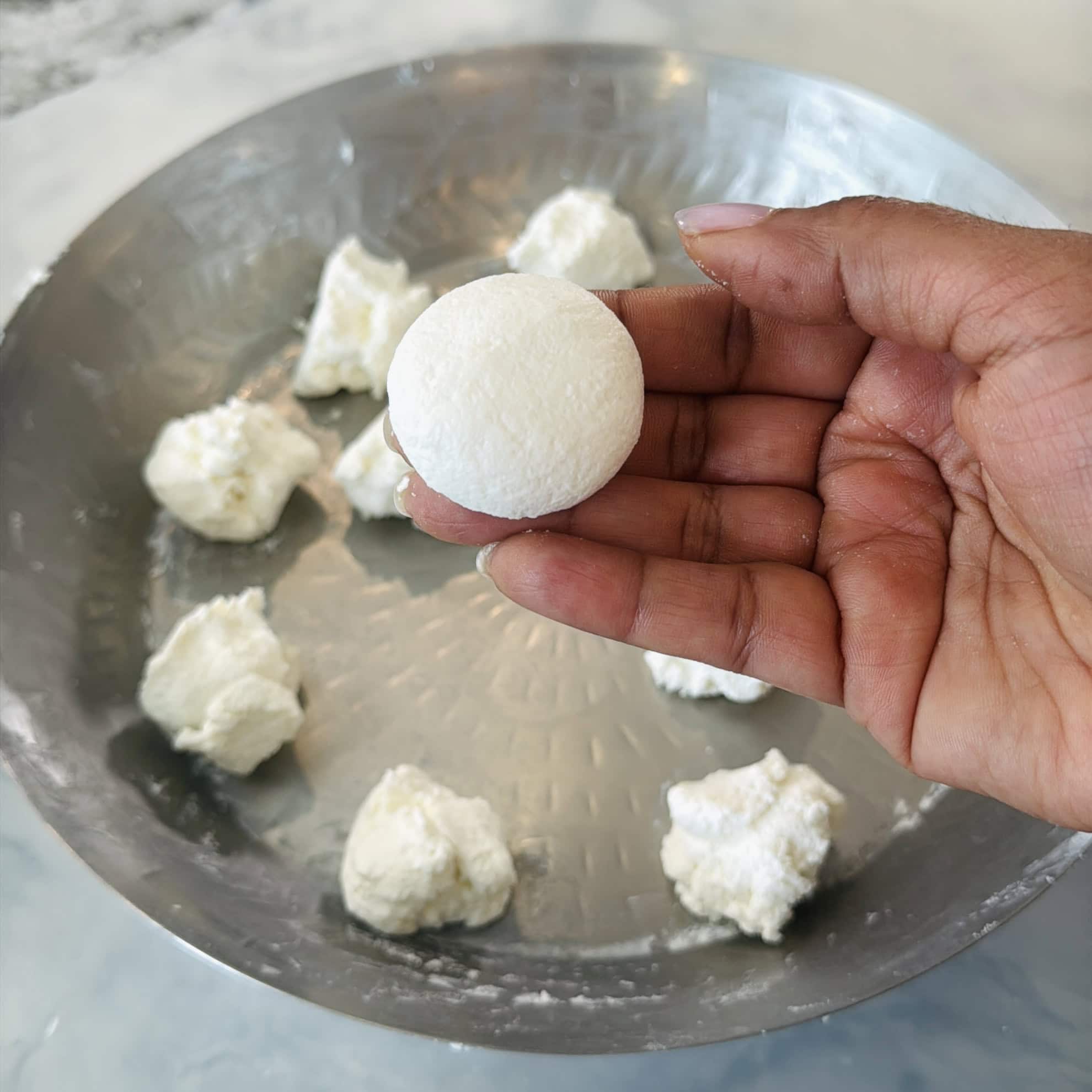
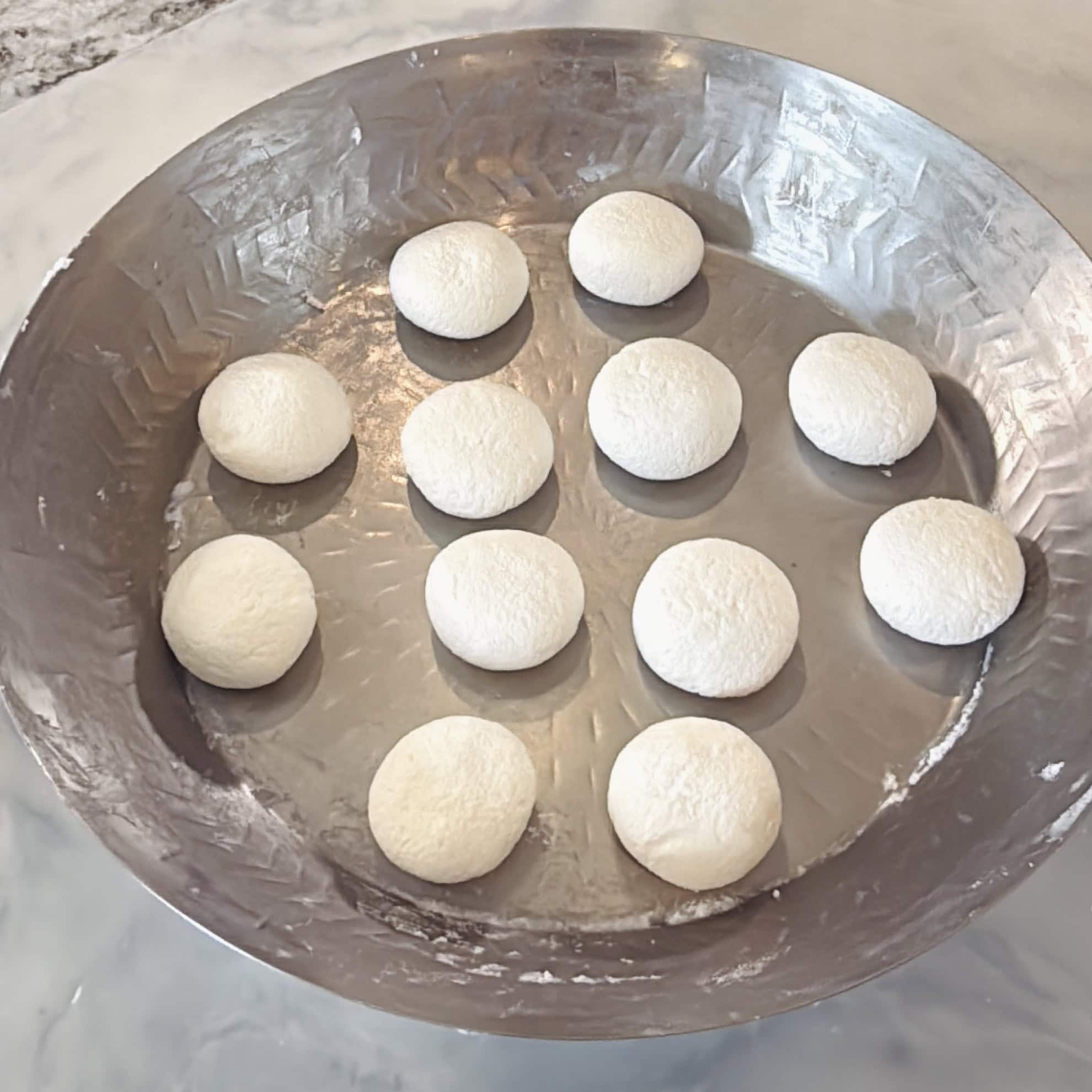
- While you wait, divide the chenna into 12 equal portions. Roll each one into a smooth ball, then lightly press between your palms to form thick, pedalike discs. Don't make them too thin, as they will expand significantly in the syrup.
Cook the Rasmalai
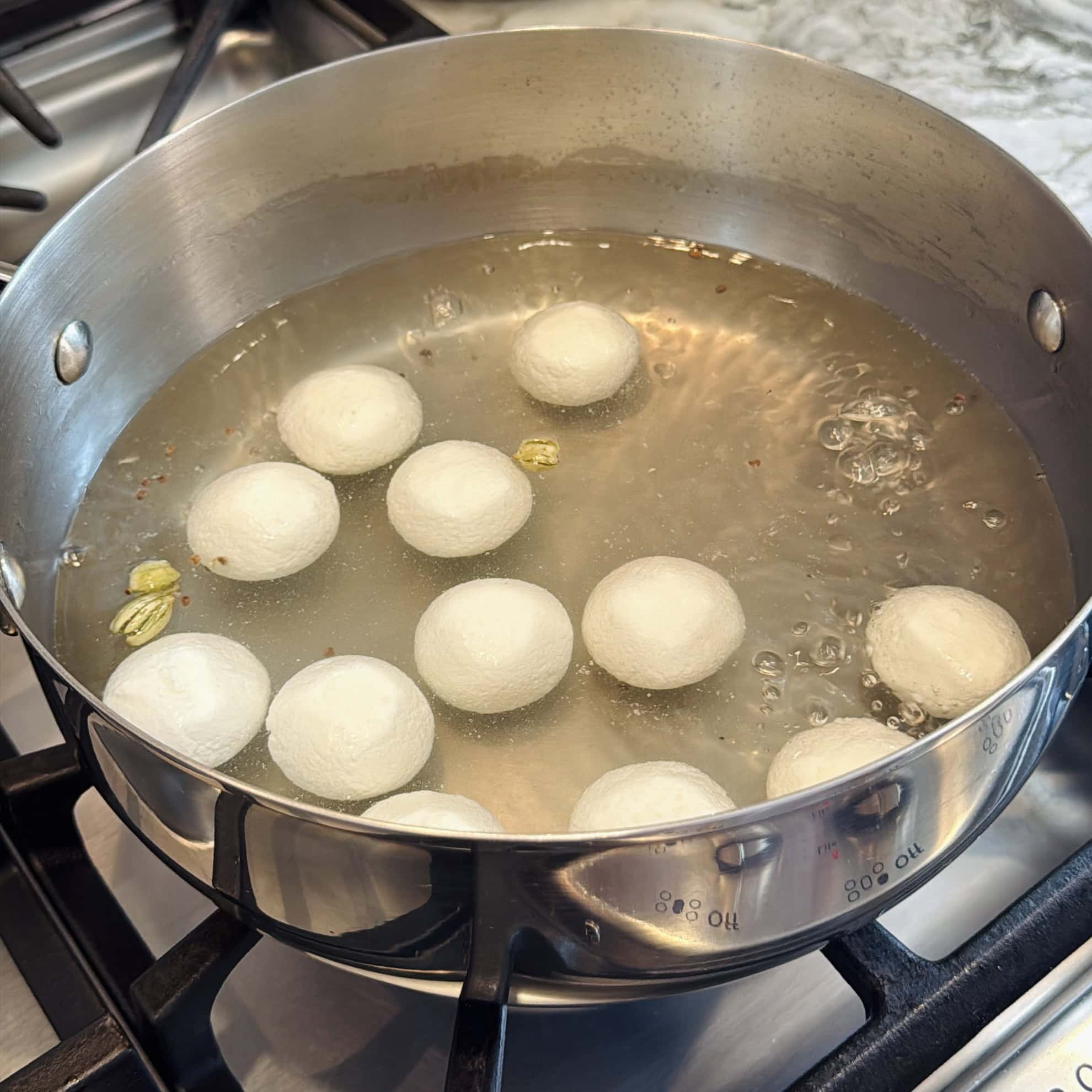
- Once the sugar syrup reaches a full boil, gently add the chenna discs into the pan. Do not stir.
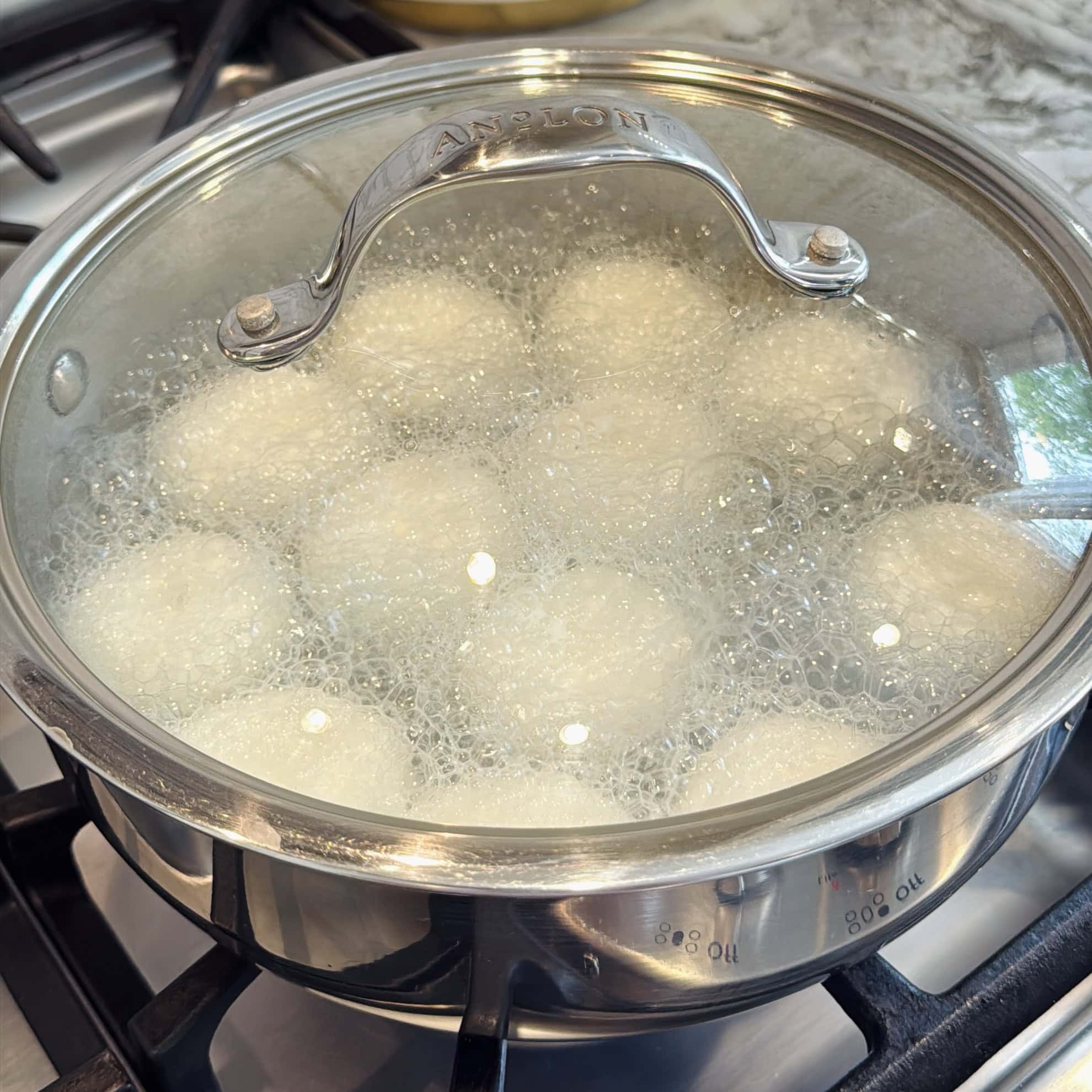
- Cook uncovered for 1 minute, then cover and cook on high heat for 10 minutes. Do not lift the lid during this time. The steam is part of what helps them puff up.
- While they cook, prepare an ice water bath in a large bowl.
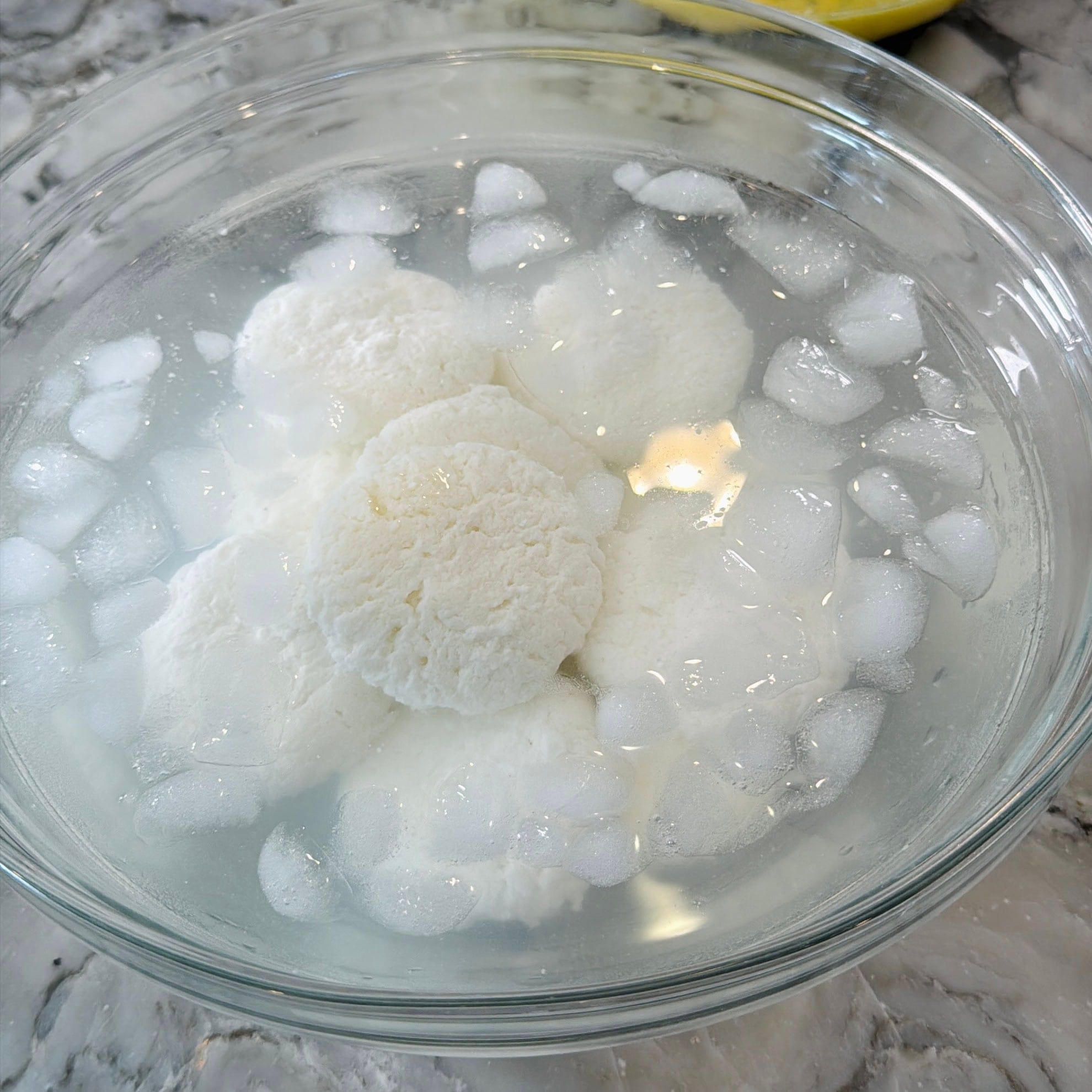
- Turn off the heat. Using a slotted spatula, carefully transfer the rasmalai to the ice water bath. They should sink to the bottom. If they float, give them another minute in the syrup.
- Let them rest in the ice bath for 10 minutes. This stops the cooking, firms them up slightly, and helps them hold their shape.
Assemble and Chill
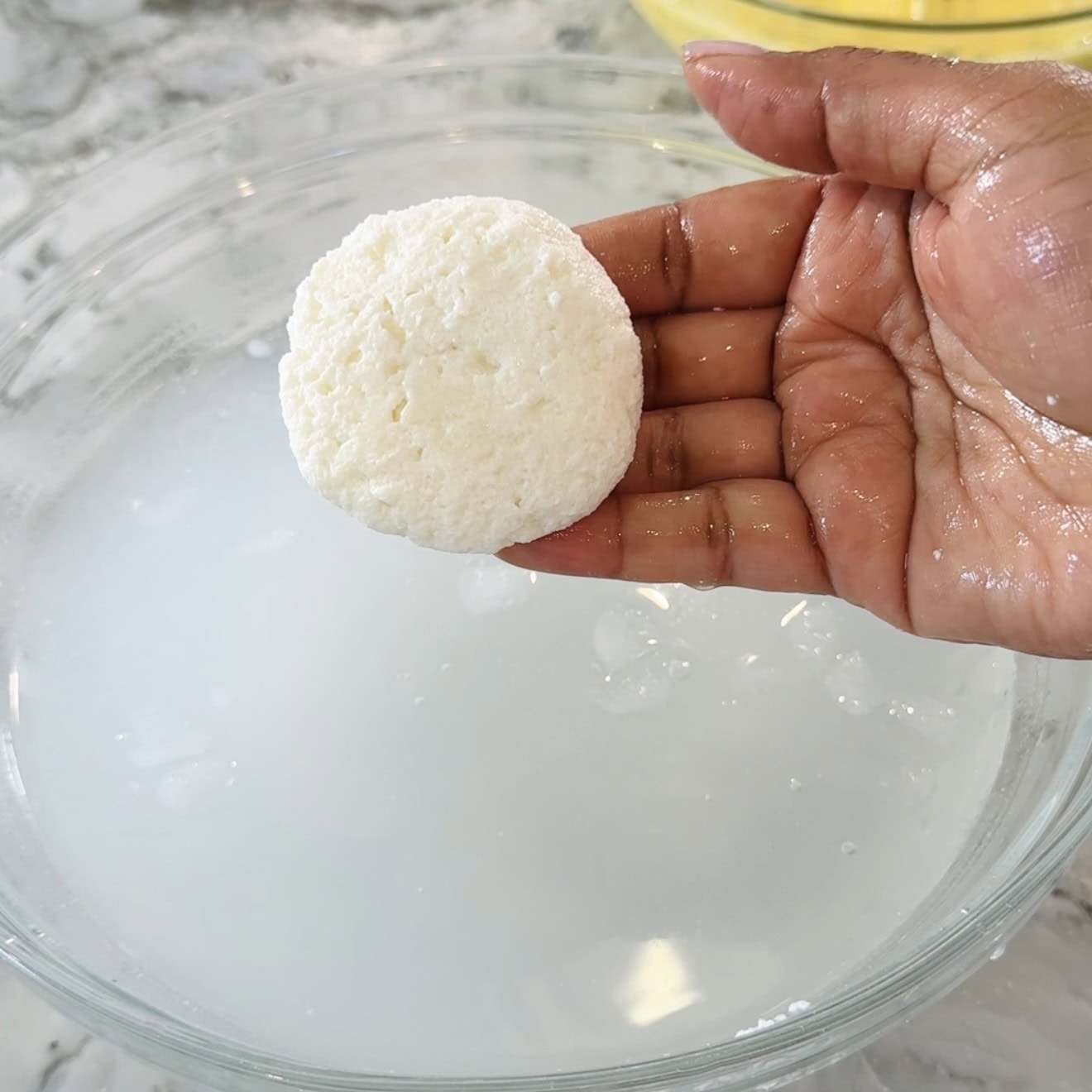
- One at a time, pick up each rasmalai and gently squeeze out the water between your palms. Not too hard, just enough to remove the syrup water so the flavored milk can soak in.
- Warm the flavored milk in the microwave or on the stovetop until it's comfortably warm (not hot, not cold).
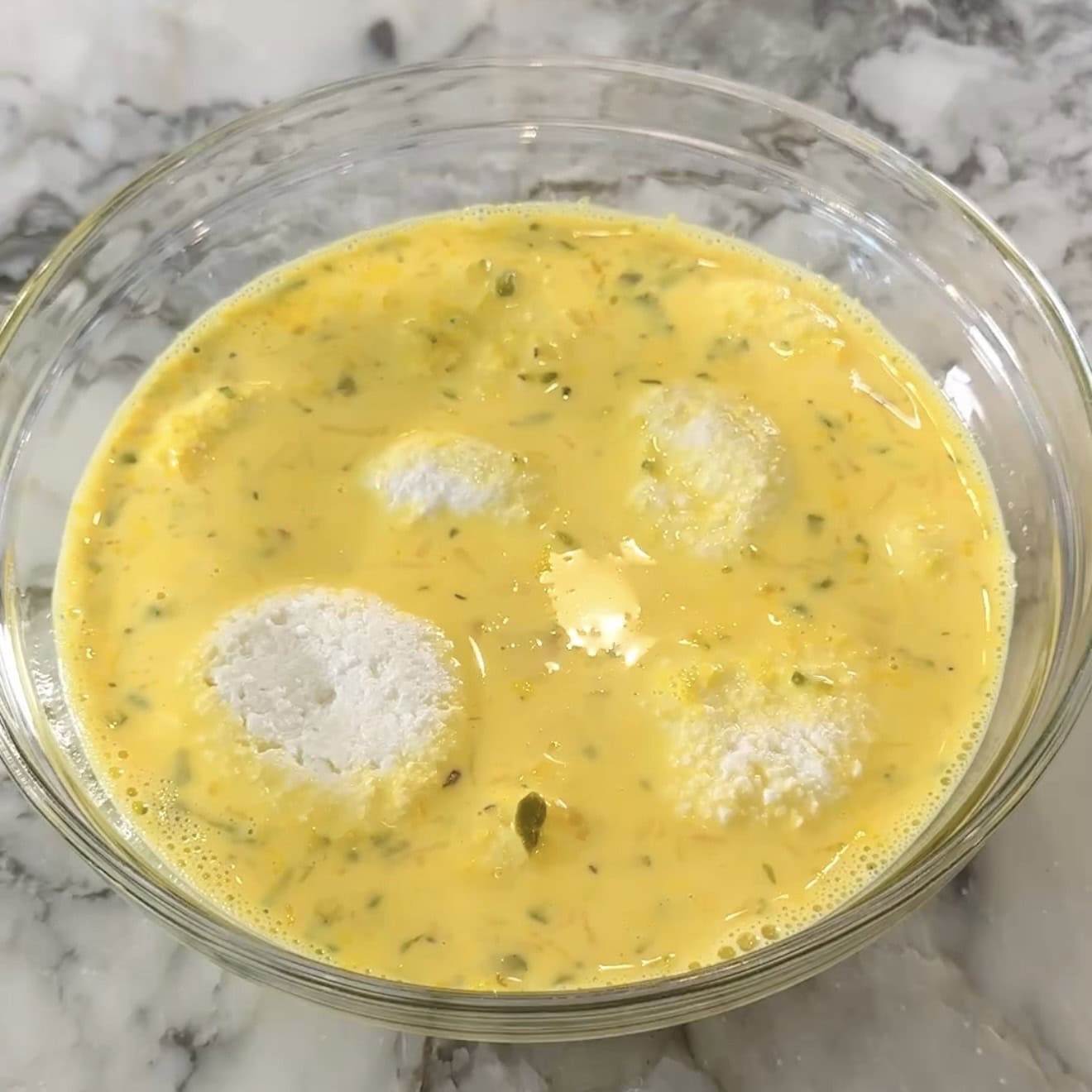
- Add the squeezed rasmalai directly to the warm milk. The milk will soak in and the rasmalai will plump back up beautifully.
- Cover and refrigerate for at least 2 hours before serving.
Leave a Reply