

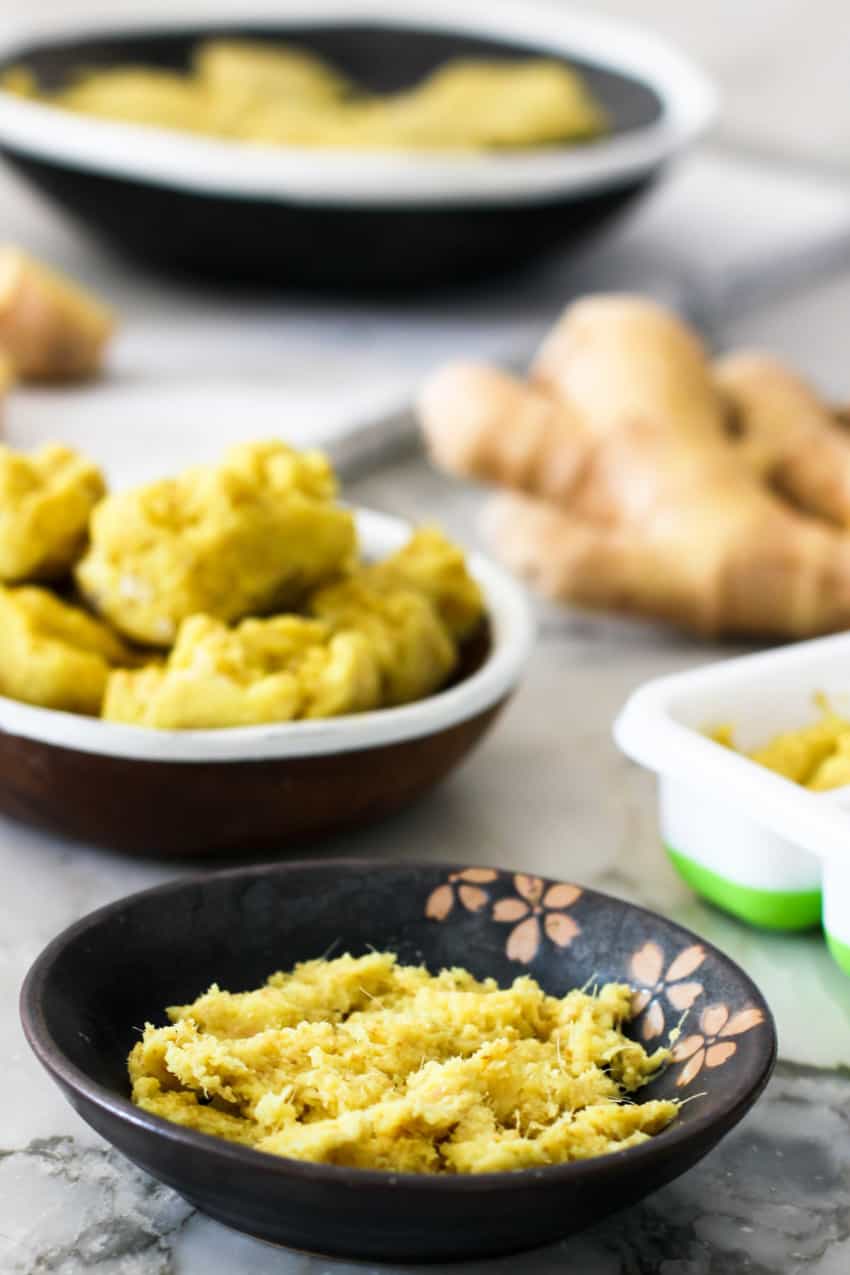
Homemade ginger paste is one of those little kitchen hacks that makes a big difference. Instead of peeling and grating fresh ginger every time you cook, just prep a batch in advance and freeze it. It keeps really well and adds that fresh, zesty kick to your dishes whenever you need it. No additives, no preservatives, just pure flavor at your fingertips.
Want to Save This Recipe?
Enter your email & I'll send it to your inbox. Plus, get great new recipes from me every week!
By submitting this form, you consent to receive emails from Minstry of Curry
If you've been following along, you already know how much I love using fresh ginger in everyday Indian cooking.
Making homemade ginger paste is one of my go-to time-saving tips in the kitchen, right up there with garlic and green chili pastes. These basics are the backbone of Indian cooking 101, and having them ready to go makes prepping dals, curries, and chai so much quicker and easier.
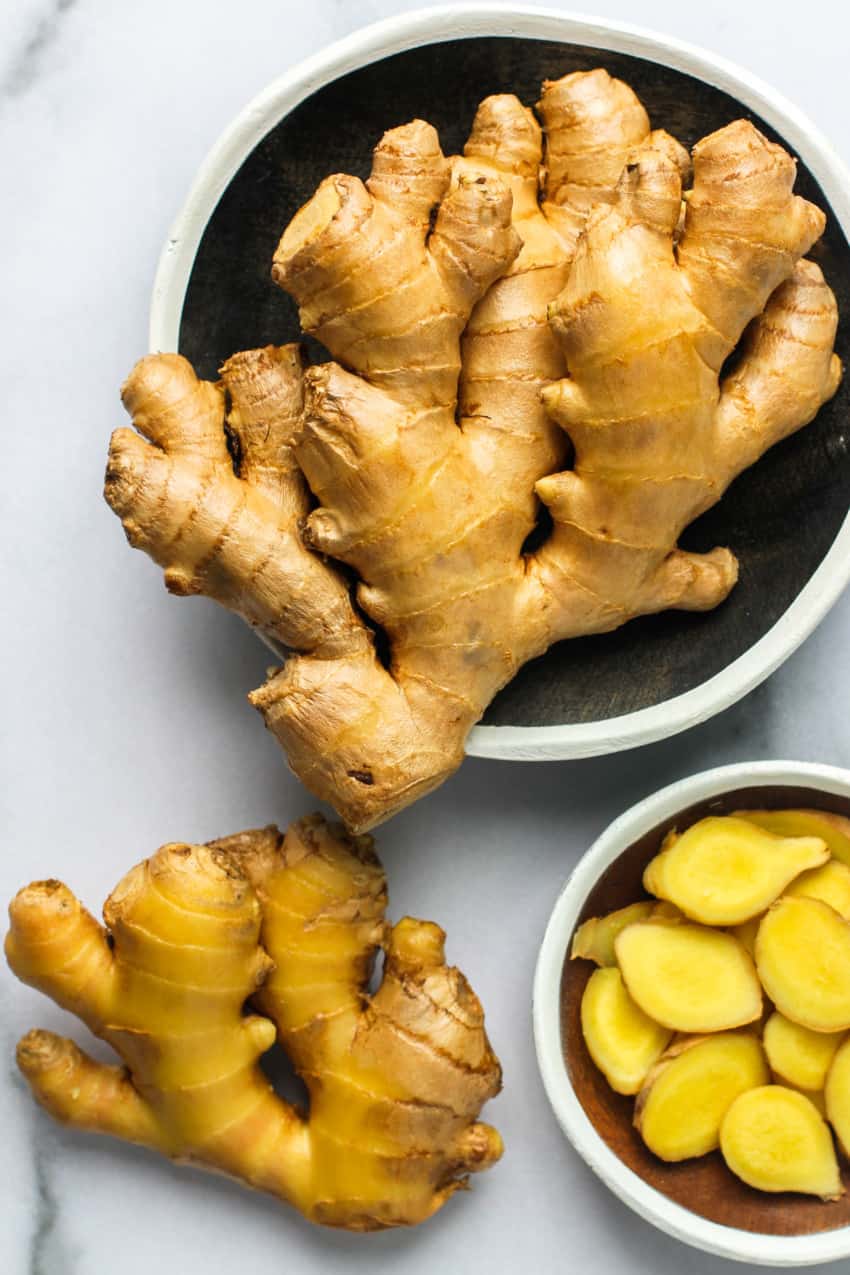
Do you need to peel ginger?
I skip peeling ginger when making paste. The skin is thin, blends right in, and doesn't affect the taste or texture. It's also completely safe to eat. If you prefer, you can peel it with a spoon or peeler, but it's totally optional.
How to make ginger paste
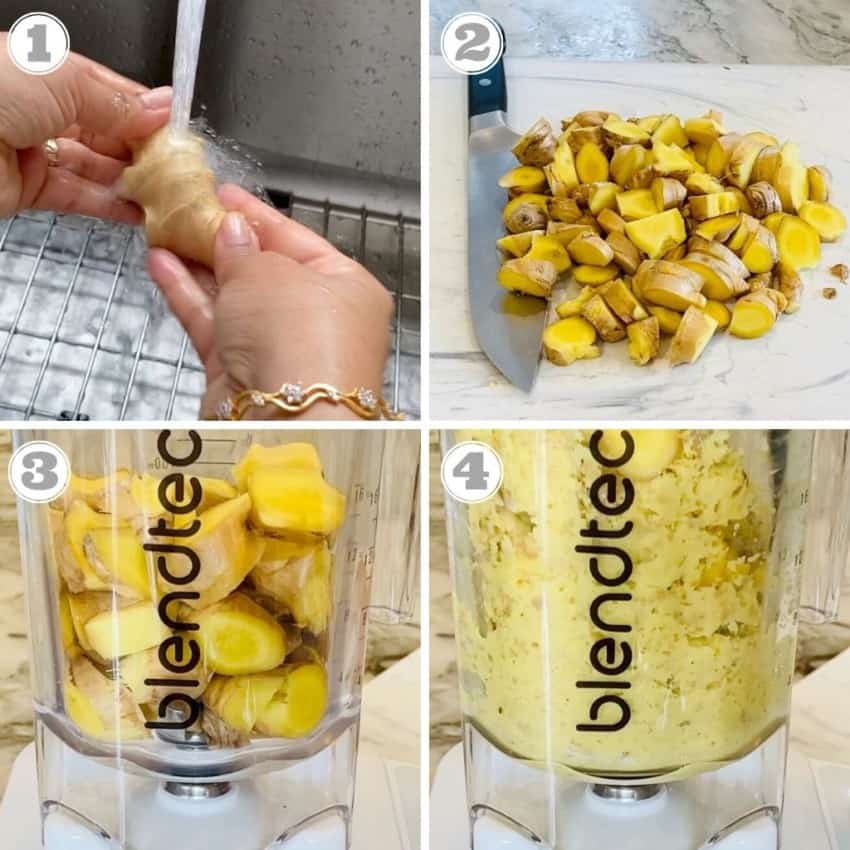
- Scrub and wash your fresh organic ginger thoroughly under running water. No need to peel them. I only remove any rough or bruised parts.
- Dry well with paper towels and then slice the ginger into small pieces.
- Blend using a food processor or high-speed blender like the Blendtec.
How to store the ginger paste
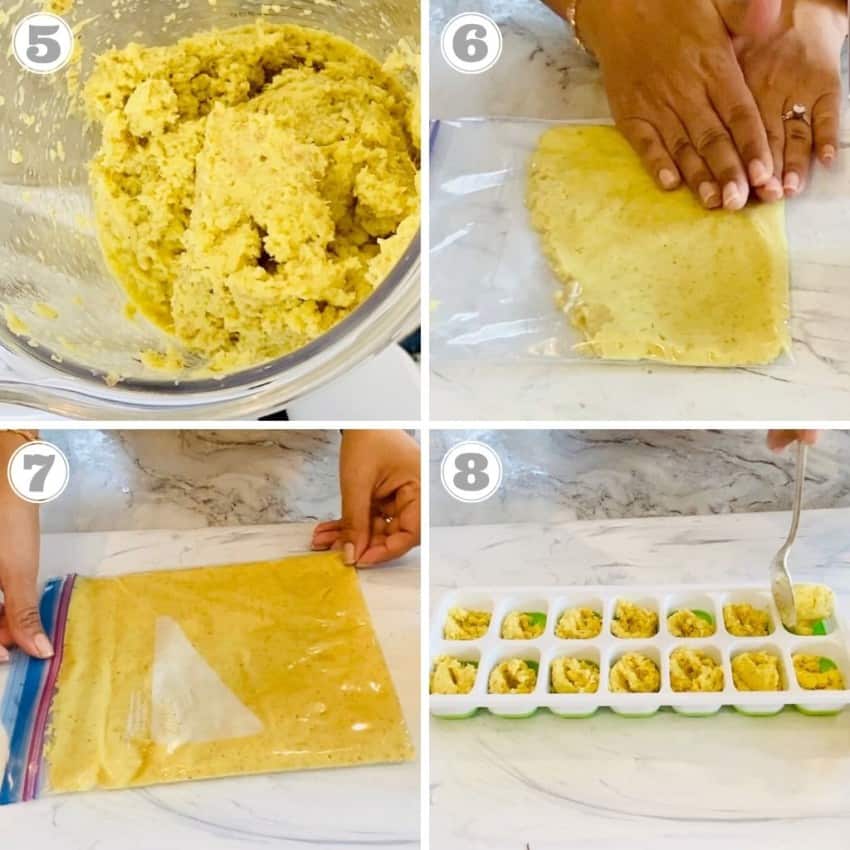
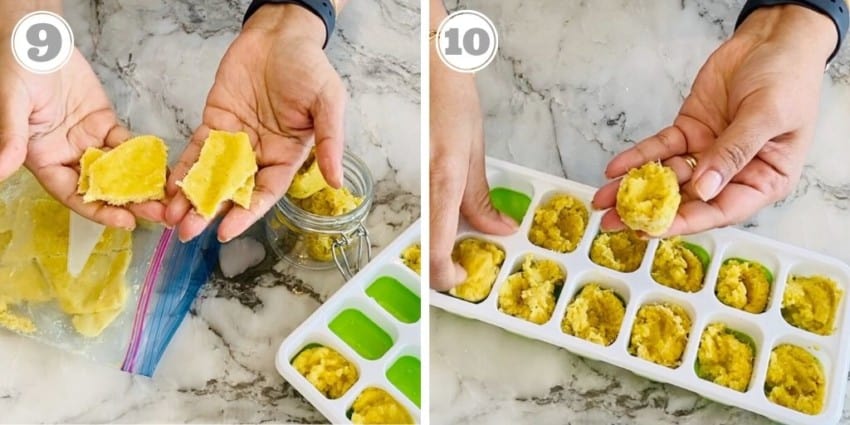
- Transfer the ginger paste into glass jars. Store it in your refrigerator for 3 to 4 days or in freezer bags for up to 4 months.
- For best results, spread thinly in the bag before freezing to make breaking your pieces easier. You can also freeze it in a silicone ice cube tray.
How to use ginger paste?
When needed, simply break a piece of the frozen ginger or take a cube out of the silicone tray. Although it takes a couple of minutes for the ginger to thaw, you can add the frozen piece to the dish you are cooking. There is no need to wait for it to thaw.
1 inch of ginger knob is the same as 1 tablespoon of ginger paste. Since this ginger paste does not use any water or oil, it's concentrated, and hence a small amount will add full flavor to any dish.
Yes, you can buy ginger paste if you're short on time or can't find fresh ginger. Look for an organic bottled version from a trusted brand. That said, if you have a little time and basic tools, homemade ginger paste gives better flavor and quality control. A blender with scraping paddles or a food processor with an S blade works great.
Don't want to invest in appliances? Just use a simple grater, then freeze the grated ginger using the techniques I've shared. It's a great shortcut with fresh flavor.
★ Tried this recipe? I'd love to hear how it turned out! Leave a comment and let me know, or snap a quick pic and upload it-I love seeing your creations. If you're on Instagram, tag @ministry_of_curry so I can check it out. Your feedback means so much to me and makes all the time I spend perfecting each recipe totally worth it. Thank you!
Recipe
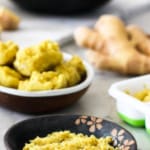
Ginger Paste
Recipe Video
Ingredients
- 1 lb fresh ginger root organic recommended
Instructions
Prep the Ginger
- Break the big ginger root into smaller knobs by hand.
- Scrub and wash thoroughly under running water to remove all the dirt.
- Dry each piece well using a clean kitchen towel or paper towels. I do not peel the ginger, but you may if you like.
- Cut into smaller ½ inch pieces.
Blend into paste
- Add the ginger pieces to a blender jar and process until a smooth paste forms.
- Note: Do not add water while blending. I use the Twister Jar with the Blendtec Blender. You can also use a food processor with the "S" blade.
Storing - 3 ways!
- Place 2 to 3 tablespoons of ginger paste in a quart-sized freezer zip lock bag and spread it evenly to make a thin layer. Stack up the bags and freeze them flat in the freezer. Note: Do not make a thick layer of ginger as it will be hard to break it off when you need to use smaller pieces. Frozen ginger will be good for 2 to 3 months.
- Freeze in reusable silicone ice cube trays. Each compartment will usually hold about 1 tablespoon. You can put less if you usually use less ginger in your cooking. This way, when you are ready to cookyou can pop out smaller cubes. Frozen ginger will be good for 2 to 3 months.
- You can also refrigerate the paste in a glass jar. This paste will stay fresh for 3 to 4 days.


Jill says
What about all the strings in the ginger paste? Whenever I’ve blended ginger in my vitamix, there is also string ones & a little pith.
Archana says
Cut the ginger into small slices. Many stores also sell baby ginger which has less fiber.
Dominic says
Great idea. Peeled my ginger and then puréed
In my food processor. I’m storing in small ziplock
bags and freezing them. I’ve done the same process
With my garlic, just left the garlic on the course
side. Don’t have to worry about either spice drying up
or spoiling
With the food processor S blade I didn’t have a problem
with the purée being stringy.
Colleen Benedict says
I did this too!
Carol L says
I made this. I bought organic ginger and broke it up (I didn’t slice it, as other blogs said only to break it up…this could be the reason it was difficult) There was NO way this was going to pulverize to the point of being a paste….ultimately, I had to add about 2 T of organic ginger juice to get it to blend enough for a paste…And that took forever, having to pulse and move the ginger around in the blender about every 5 seconds. Still is a bit chunky.
I really feel that using thawed, frozen ginger (which I had in the freezer) would have been better as it would have had enough natural moisturizer to blend easily.
I really didn’t want to add oil, as several posts didn’t add it. This IS a great idea, though, and I’ll probably do it again when this batch is gone.
Archana Mundhe says
Thank you so much for the detailed feedback! I’ll update the recipe to include how finely the ginger should be chopped. My blender has built-in paddles that help scrape the sides, but I totally understand how pulsing or stirring manually would help in other blenders. And I completely agree—there’s no need to add extra water or oil when blending. I’ve also found that a food processor with a wider base and an S-blade can make a smoother ginger paste.